Nature’s most versatile purifier for your home and wellness routine.
If you are exploring natural remedies, you have likely asked, what is tea tree oil? It is a powerful essential oil famous for its fresh, medicinal scent and incredible cleansing properties.
Native to Australia, this oil has been used for centuries to support healthy skin and a clean environment. It is a staple in aromatherapy kits because it is effective, affordable, and easy to use.

What Is Tea Tree Oil?
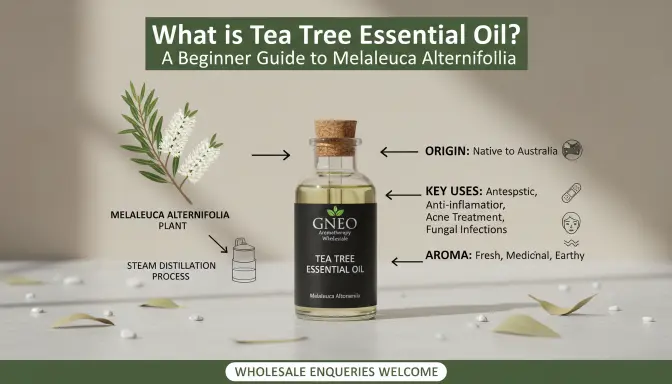
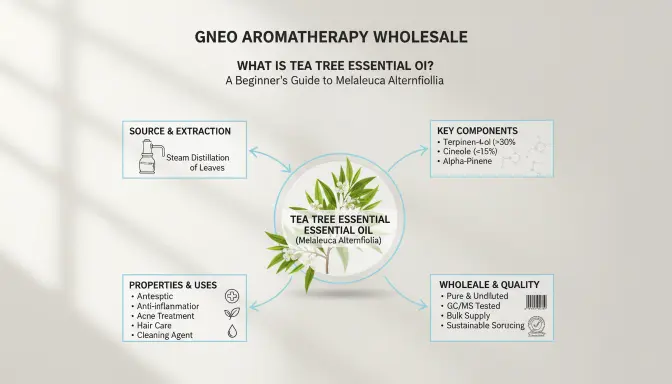
Tea tree oil is a volatile essential oil extracted from the leaves of the Australian tea tree. It is not the same plant used to make your morning cup of black or green tea.
- Source: Steam distilled from leaves and twigs.
• Appearance: Clear to pale yellow liquid.
• Aroma: Fresh, woody, earthy, and medicinal.
• Consistency: Thin and mobile.
Why Melaleuca Alternifolia Matters
Melaleuca alternifolia is the scientific name for the specific tree that produces high-quality tea tree oil. While there are other “tea trees,” this specific species contains the active compounds responsible for its famous benefits.
- Origin: Native to the swampy coast of New South Wales.
• Chemistry: High in Terpinen-4-ol, the primary active component.
• Sustainability: Trees regrow foliage quickly after harvesting.
Tea Tree Oil Benefits Customers/Users Love
Tea tree oil is celebrated globally because it serves so many different purposes in one small bottle. It acts as a “Swiss Army Knife” for natural wellness.
- Cleanses Skin: Helps reduce the appearance of blemishes.
• Purifies Air: Freshens stale or musty rooms when diffused.
• Soothes Scalps: Great for reducing itchiness and flakes.
• Deodorizes: Neutralizes bad odors in shoes or trash cans.
• Supports Nails: Keeps toenails looking clean and healthy.

How Tea Tree Oil Fits Into Daily Life / Industry
This oil is incredibly flexible and fits easily into cleaning routines and personal care regimens. It bridges the gap between household cleaning and beauty care.
Common Tea Tree Oil Uses Include:
• DIY all-purpose surface cleaners.
• Facial toners for oily or acne-prone skin.
• Refreshing foot soaks after a long day.
• Natural homemade deodorant sticks.
• Laundry boosters to remove musty smells.
Tea Tree Oil in Professional Practice
Professionals in spas, salons, and wellness centers rely on this oil for its purifying nature. It provides a sense of hygiene and cleanliness that clients appreciate.
- Massage Therapy: Added to blends to support skin hygiene.
• Pedicures: Used in foot baths to cleanse and refresh.
• Aromatherapy: Diffused in waiting rooms to clear the air.
• Hair Care: Included in clarifying shampoos to remove buildup.
Is Tea Tree Oil Beginner-Friendly?
Yes. It is one of the best oils for beginners to start with. It is affordable, widely available, and has dozens of practical uses, though it should always be diluted with a carrier oil before touching the skin.
Popular Tea Tree Oil Pairings
Tea tree oil has a strong scent, so blending it with other oils can make it more pleasant.
- Lavender: Softens the medicinal scent and adds soothing properties.
• Lemon: Enhances the cleaning power and adds a bright top note.
• Peppermint: Creates a cooling, energizing blend for foot care.
• Eucalyptus: Pairs perfectly for a “breathe easy” shower experience.
Why Tea Tree Oil Is a Must-Have
Understanding what is tea tree oil opens the door to a cleaner, more natural lifestyle. It is a multitasking powerhouse that replaces harsh chemicals with plant-based power.
- Versatile: Works for skin, hair, and home cleaning.
• Potent: A little goes a very long way.
• Accessible: Easy to find and budget-friendly.
• Proven: Backed by decades of traditional and modern use.

FAQ
- Can I apply tea tree oil directly to my skin?
No, it is very potent and should be diluted with a carrier oil like jojoba or almond oil first. Applying it “neat” (undiluted) can cause skin irritation or sensitization. - Is tea tree oil safe for pets?
Generally, no. Tea tree oil can be toxic to dogs and cats, especially if ingested or applied to their skin. Always consult a veterinarian before using essential oils around animals. - What does tea tree oil smell like?
It has a very distinct smell that is often described as medicinal, camphoraceous, and fresh. It smells similar to eucalyptus but is earthier and more woody. - Does tea tree oil expire?
Yes, like all essential oils, it will eventually oxidize. It typically has a shelf life of 2 to 3 years if stored in a cool, dark place with the cap tightly closed.