


🌿 Choosing the Right Form: Witch Hazel Distillate, Witch Hazel Extract, or Witch Hazel Hydrosol?
When people search for witch hazel, they often assume it’s just one simple ingredient. However, navigating the nuances of witch hazel extract vs witch hazel is essential for building an effective routine.
But here’s where things get interesting:
👉 Witch hazel comes in different forms—and each one behaves differently on your skin. Whether you are looking for unscented witch hazel or a specific extraction method, understanding the chemistry is key.
Understanding these forms isn’t just technical knowledge—it directly affects:
• How gentle the product feels
• How strong the results are
• How your skin reacts over time
At Get Natural Essential Oils (gNEO), we focus on clarity in ingredients—because better choices lead to better skin.

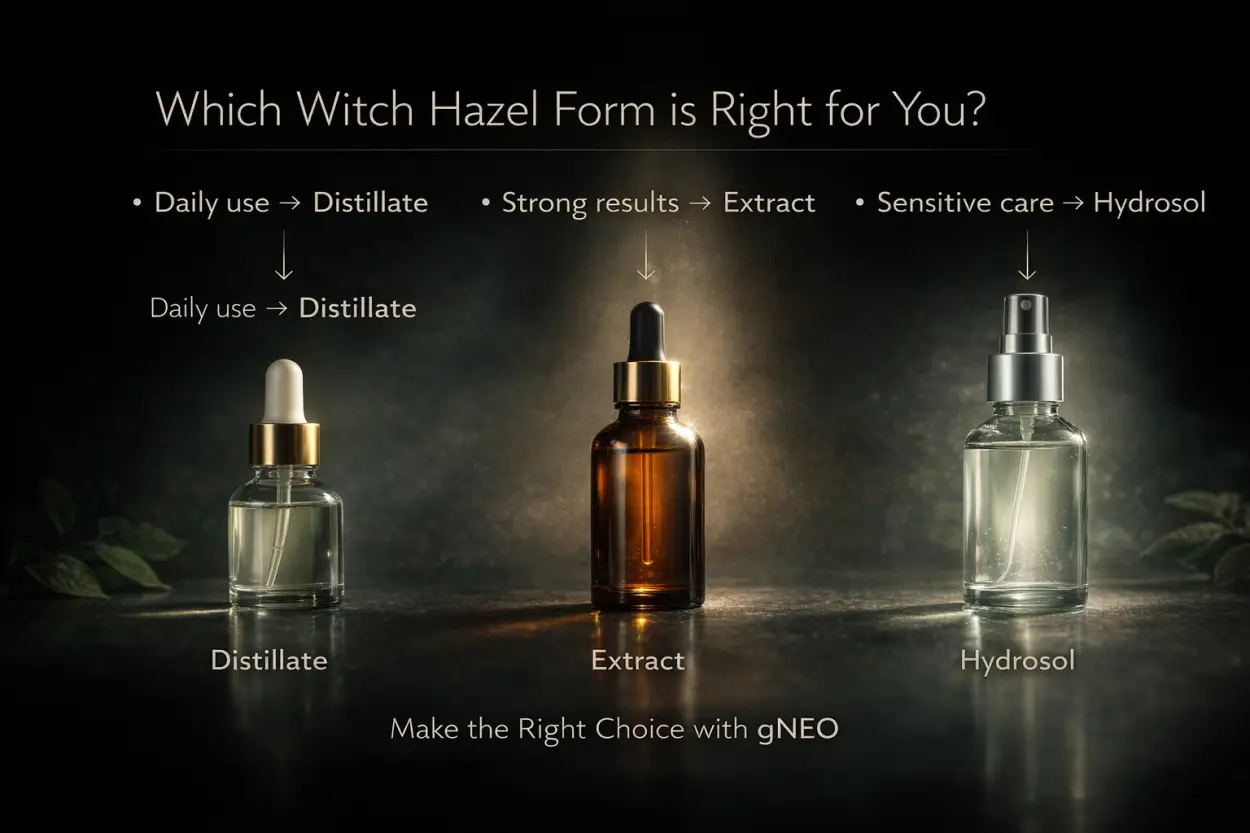
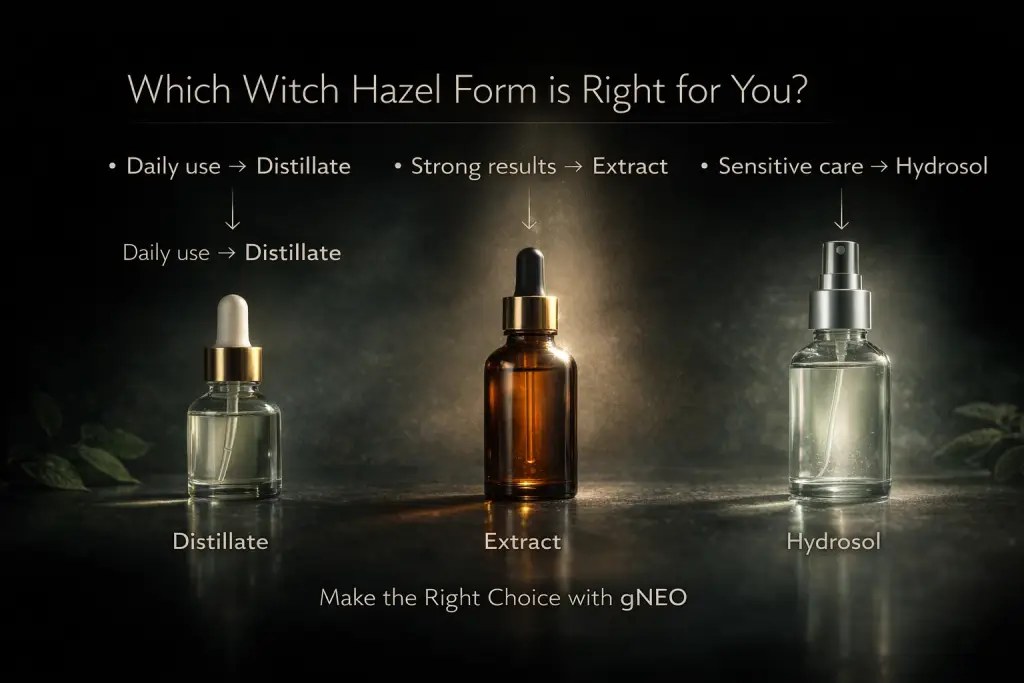
Witch hazel forms differ primarily by extraction method: Distillate is steam-distilled for a balanced, mild astringent effect; Extract is solvent-soaked for high potency and stronger results; and Hydrosol is a gentle, water-based byproduct ideal for sensitive skin. Choosing the right form depends on your skin’s sensitivity and desired treatment intensity.
Key Takeaways
- Distillate is the standard, balanced form typically found in facial toners.
- Extracts are highly concentrated and potent, often using alcohol, making them better for targeted treatments.
- Hydrosols are the gentlest form, containing trace plant compounds, perfect for sensitive skin.
- The primary difference lies in the extraction method: steam distillation vs. solvent soaking.
- Choosing the right form depends on your skin’s reaction and your specific skincare goals.
🌱 Why Witch Hazel Exists in Different Forms
The difference starts with how the plant is processed. The Hamamelis virginiana plant is the source of these potent ingredients, but the tannin concentration varies significantly based on production.
The same plant—Hamamelis virginiana—can produce different results depending on:
• Extraction method
• Use of alcohol or water
• Steam Distillation process
👉 Think of it like coffee: same bean, different brew methods = different strength and feel.

🧪 Witch Hazel Distillate: The Balanced Middle Ground
What is Witch Hazel Distillate?
A witch hazel distillate is a water-based product created through steam distillation, capturing the volatile components of the plant without the harshness of high-alcohol solvents.
Distillate is what most people unknowingly use. Many consumers search for distilled witch hazel or distilled witch hazel extract when seeking a reliable, alcohol-free toner.
It’s created through steam distillation, where:
• Plant material is heated
• Vapors are collected and condensed
• Active compounds are preserved in water
What makes it unique:
• Light and refreshing feel
• Mild astringent effect
• Suitable for daily use
👉 This is the form commonly found in facial toners.

🌿 Witch Hazel Extract: The Concentrated Form
A pure witch hazel extract is typically a more potent preparation, often utilizing solvent extraction to maximize the polyphenols and tannins present in the Hamamelis virginiana bark.
Extract is a more intensive version.
It’s typically made by soaking plant material in alcohol or solvent to pull out active compounds.
This results in:
• Stronger potency
• More noticeable astringent effect
• Faster visible impact
But there’s a trade-off:
👉 It can feel stronger on the skin and may not suit everyone.

How does the witch hazel distilled process differ from other methods?
The witch hazel distilled process involves a precise steam distillation process that separates volatile plant compounds from the raw Hamamelis virginiana material. Unlike solvent-based methods, this technique captures water-soluble compounds while leaving behind heavier components, resulting in a gentle, clear liquid that maintains skin microbiome balance without relying on harsh additives.
Because the steam distillation process is so specific, the final product is distinct from non-distilled preparations. While extracts often focus on maximizing tannin concentration through maceration, distilled versions prioritize purity. This makes alcohol-free witch hazel distillates an ideal choice for sensitive skin, as they provide mild astringent properties without stripping the skin’s natural moisture barrier or requiring aggressive preservative systems.
💧 Witch Hazel Hydrosol: The Gentle Alternative
A witch hazel hydrolat (or hydrosol) is the aromatic water remaining after the steam distillation of the plant, offering a gentle option for sensitive skin care.
Hydrosol is often the most overlooked form—but it’s incredibly useful.
It’s the water byproduct of distillation, containing trace amounts of plant compounds.
This makes it:
• Very gentle
• Lightly aromatic
• Ideal for sensitive or reactive skin
👉 Think of it as the softest version of witch hazel.

🔍 Seeing the Difference Side by Side
Understanding the difference between alcohol and witch hazel is crucial, as many commercial products contain added ethanol, which can disrupt the skin microbiome balance.
Instead of memorizing definitions, it’s easier to see how they compare.

| Form | Feel | Strength | Common Use |
|---|---|---|---|
| Distillate | Light | Medium | Toners |
| Extract | Strong | High | Treatments |
| Hydrosol | Very light | Low | Sensitive care |
🌿 What This Means for Your Skincare Choices
Choosing the right form isn’t about “best”—it’s about fit.
Your choice depends on:
• How your skin reacts
• What results you want
• How often you plan to use it
👉 The same ingredient can behave very differently depending on its form.
🌱 The gNEO Perspective
At Get Natural Essential Oils (gNEO), we don’t just focus on ingredients—we focus on how they’re made.
Because:
👉 The form of an ingredient defines its performance. If you are confused about witch hazel usp meaning or distilled witchhazel labeling, remember that transparency is key.
That’s why understanding distillate, extract, and hydrosol helps you make smarter skincare choices.

🔑 Final Thoughts
Witch hazel isn’t one single product—it’s a family of forms.
And once you understand the difference:
• You choose better
• Your skin responds better
• Your routine becomes simpler
👉 That’s the real power of informed skincare.
Frequently Asked Questions
Is witch hazel extract the same as witch hazel?
No, they are not the same. Witch hazel extract is a highly concentrated version made by soaking plant material in solvents, while standard witch hazel is usually a distillate, which is a milder, water-based product used for general skincare and toning.
What is the difference between witch hazel and witch hazel extract?
The main difference is concentration and processing. Extract involves solvent-based soaking to pull out maximum active compounds, resulting in high potency. Standard witch hazel is typically distilled, offering a lighter, more balanced astringent effect suitable for daily use.
Can I use witch hazel extract on my face?
You can, but it should be used with caution. Because witch hazel extract is highly concentrated, it may be too harsh for sensitive skin or daily use. It is best reserved for targeted spot treatments rather than all-over facial toning.
What is witch hazel distillate used for?
Witch hazel distillate is primarily used as a facial toner, cleanser, or aftershave. Its mild astringent properties help remove excess oil, soothe minor skin irritations, and balance the skin’s pH without causing the dryness associated with stronger, alcohol-heavy extracts.
Is witch hazel distillate natural?
Yes, witch hazel distillate is derived from the Hamamelis virginiana plant through steam distillation. While the process is natural, consumers should check labels for added ingredients like alcohol or preservatives, which are sometimes added to commercial distillates to increase shelf life.
Does witch hazel distillate contain alcohol?
Many commercial witch hazel distillates contain added alcohol (often 14-15%) to act as a preservative and enhance the astringent effect. However, alcohol-free versions are available for those with dry or sensitive skin who want the benefits of the distillate without the drying effects of alcohol.
What is witch hazel distillate SB?
Witch hazel distillate SB is a specific industry designation, often referring to a ‘Standard Blend’ or a specific supplier’s formulation. It is typically used by cosmetic manufacturers to ensure consistency in alcohol content, purity, and efficacy when formulating skincare products like toners and lotions.
Where can I buy witch hazel distillate SB?
Witch hazel distillate SB is primarily sold through cosmetic ingredient suppliers and bulk chemical distributors rather than retail pharmacies. It is intended for formulators and DIY skincare makers who need consistent, professional-grade ingredients for their product batches.
What is the benefit of witch hazel hydrosol?
Witch hazel hydrosol is the gentlest form of the plant, making it perfect for sensitive, reactive, or dry skin. It provides mild soothing and anti-inflammatory benefits without the harshness of alcohol or the high concentration of tannins found in extracts.
Is distilled witch hazel extract good for acne?
Yes, it can be effective for acne due to its astringent properties, which help remove excess oil and tighten pores. However, because it is an extract, it may be drying, so it should be used sparingly or as a spot treatment rather than all over the face.
Is a hydrolat the same as a hydrosol?
Yes, ‘hydrolat’ and ‘hydrosol’ are interchangeable terms for the same product. Both refer to the aromatic floral water produced during the steam distillation of plant materials, such as witch hazel, rose, or lavender.