

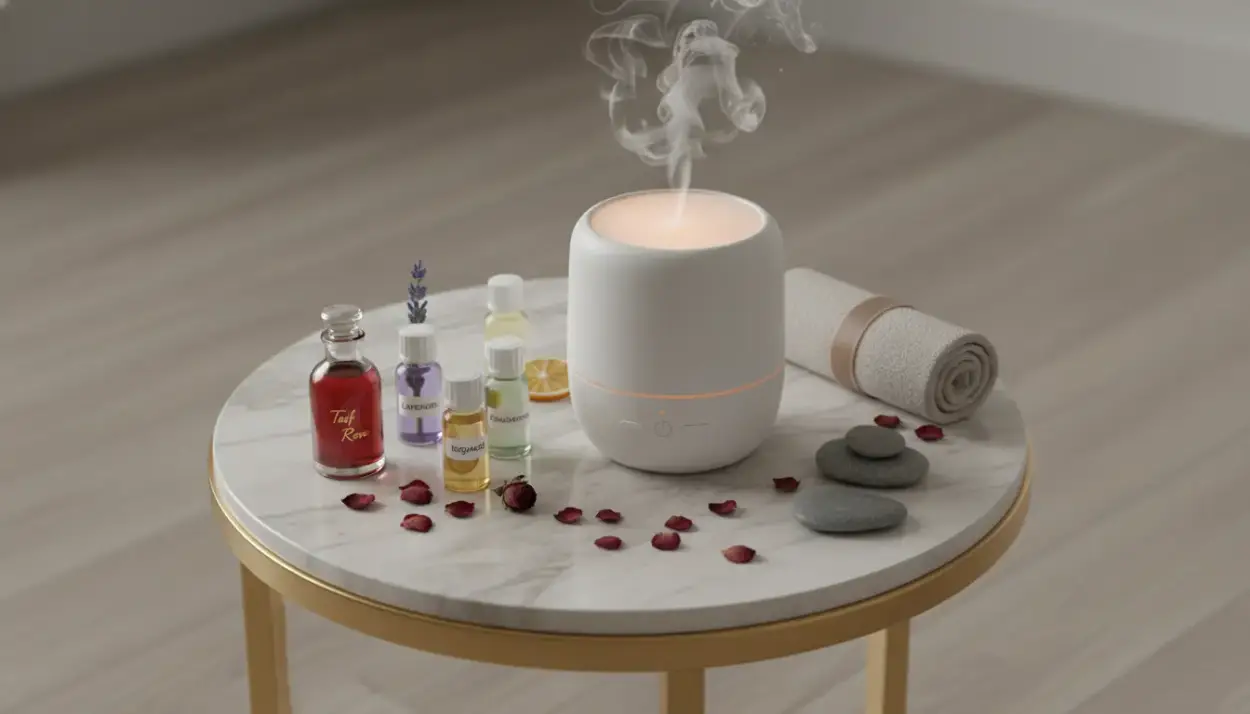
Taif Rose: Fragrance & Functional Profile
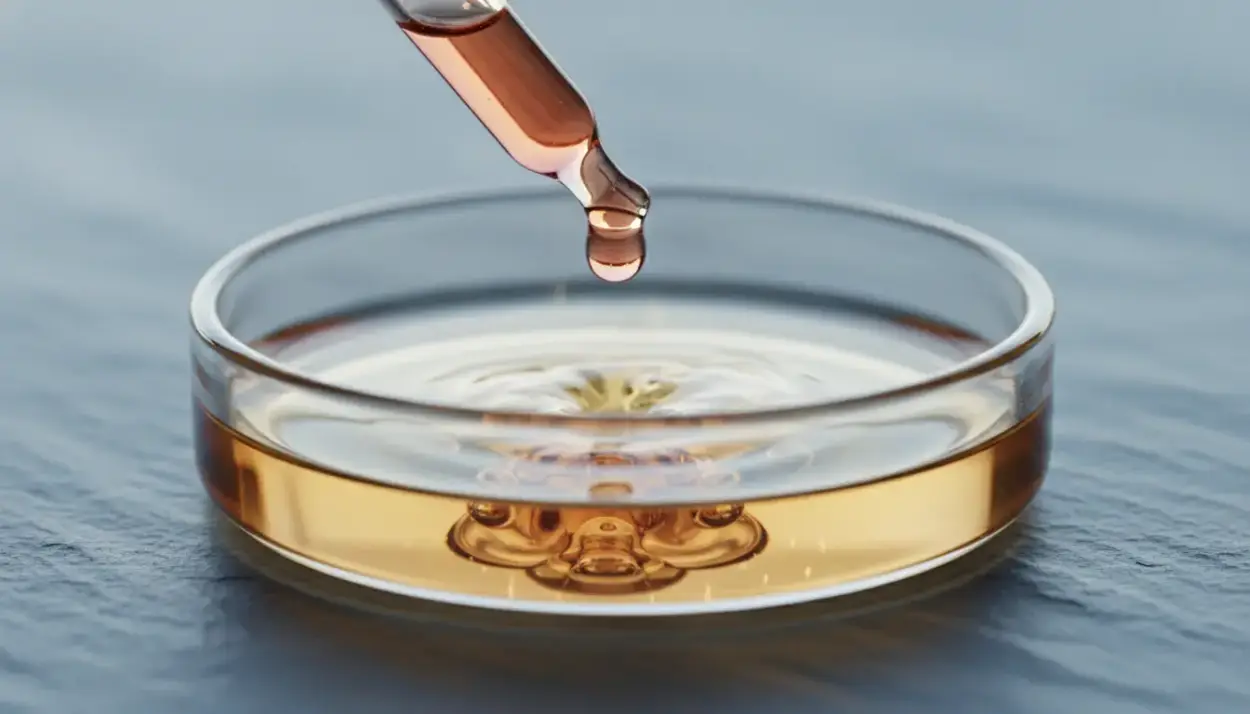
Essence: Taif Rose oil (Rosa damascena var. trigintipetala) is a middle/heart note: rich rose + lychee-like fruit, delicate green/metallic facets, powdery/tea/spicy nuances. It’s precious, nuanced and easily masked by stronger oils.
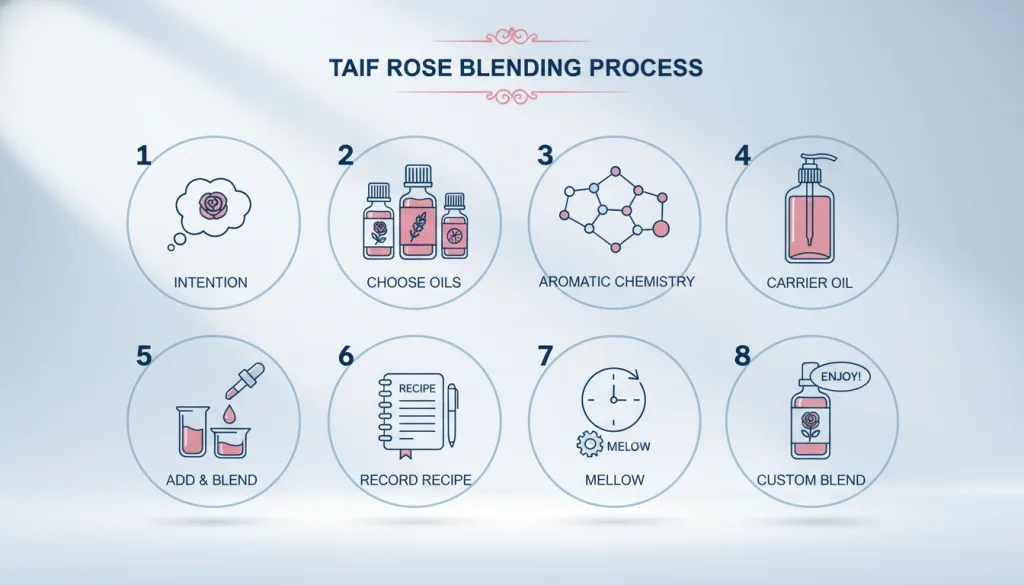
Key blending principles
-
Middle note role: Use top notes (citrus, bergamot) to open the composition and base notes (sandalwood, oud, vetiver) to fix and extend longevity.
-
Enhance, don’t hide: Aim to support Taif Rose — choose partners that reveal different facets (sweet, green, spicy, woody).
-
Chemistry matters: Citronellol/geraniol/nerol drive the “rose” character; linalool & phenylethyl alcohol add calm and mild antiseptic qualities. Know these so you predict oxidation, longevity, and therapeutic synergy.
-
Intent first: Perfume, diffuser, or skin product → choose partners and concentration accordingly (different rules for aromatherapy vs. leave-on skincare).
Best Complementary Oils & Example Formulas (why they work + exact ratios)
Below are tested pairing groups with short rationale and sample concentrate ratios (then dilute to final product % per).
Floral bouquets (romantic, lush)
-
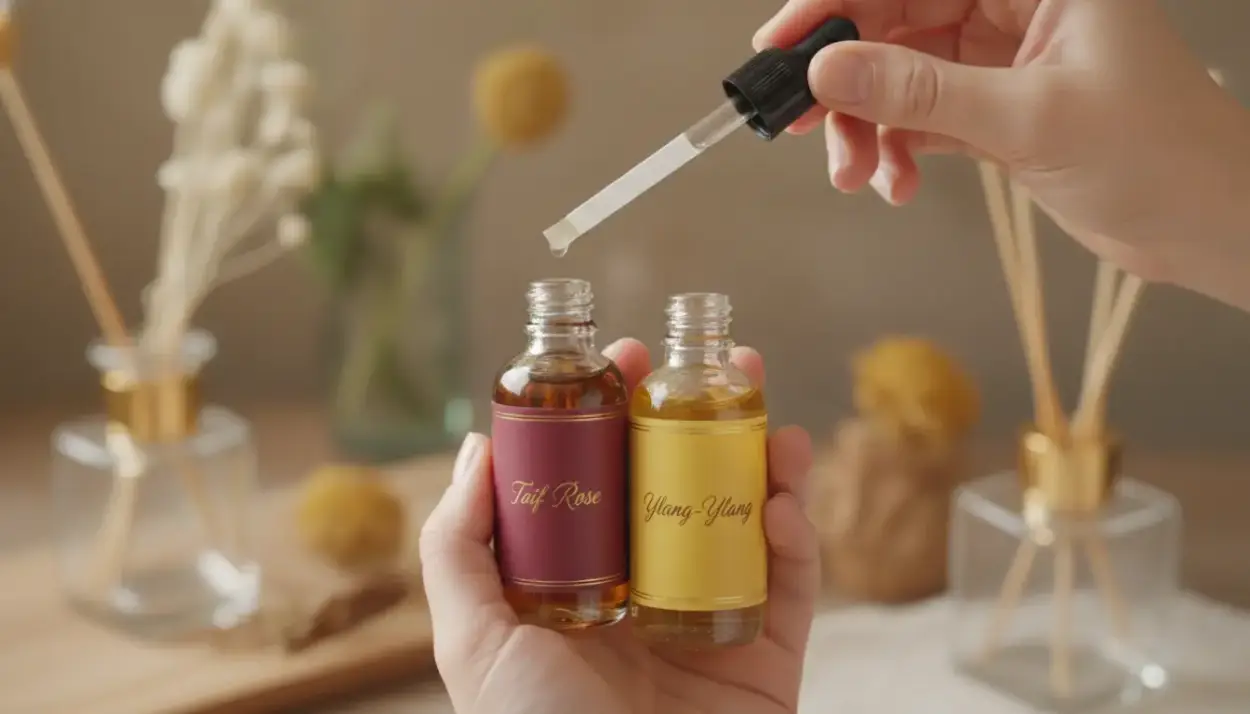
Partners: Jasmine, Neroli, Geranium, Ylang-Ylang, Palmarosa
-
Why: Reinforce sweetness, body and emotional lift; jasmine and ylang-ylang add sensual depth while geranium supports rose character.
-
Sample perfume concentrate (by volume %):
Taif Rose 40 / Jasmine 15 / Neroli 15 / Geranium 20 / Vetiver 10
Bright tops (diffuser / fresh blends)
-
Partners: Bergamot, Sweet Orange, Tangerine, Lemon
-
Why: Citrus lifts and reveals rose’s fruity facet; use in diffusers or summer sprays.
-
Sample diffuser ratio (drops proportion): Taif Rose 2 / Bergamot 4 / Lavender 4
Woody & resinous bases (longevity, attars)
-
Partners: Sandalwood, Oud, Patchouli, Vetiver, Frankincense
-
Why: Provide fixation and warmth; classic Dubai/Gulf-style attars use sandalwood + rose.
-
Sample attar concentrate: Taif Rose 30 / Aged Sandalwood 55 / Oud 5 / Patchouli 10
Spicy & herbal accents (complexity)
-
Partners: Cardamom, Clove (tiny), Clary Sage, Rosemary
-
Why: Add warmth, slight dryness or an herbaceous edge for gender-neutral blends.
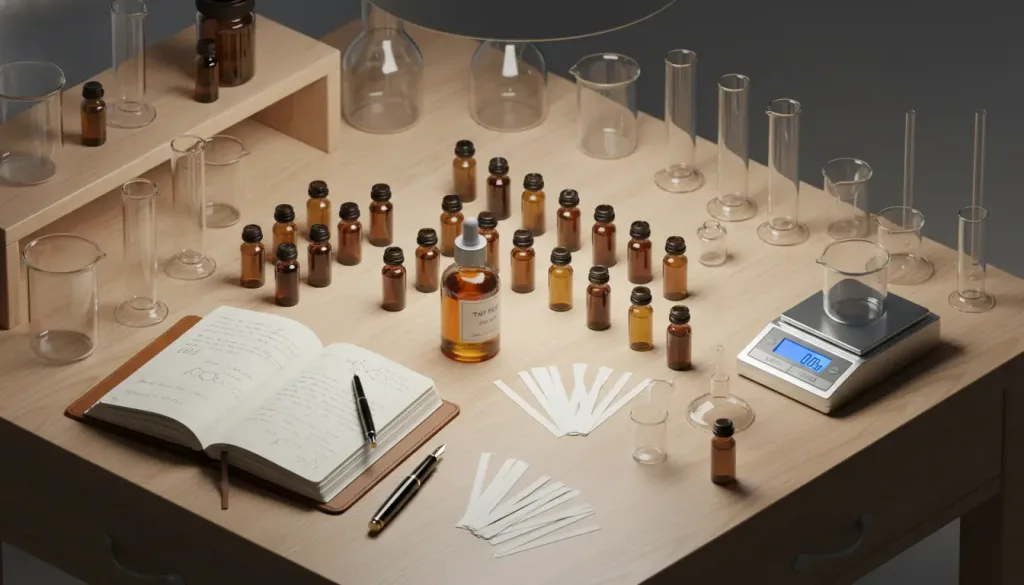
Practical Workflow, Safety & Sourcing (hands-on guide you can use immediately)
A — Quick workflow (micro-batch testing)
-
Define goal (perfume, diffuser, serum).
-
Pick 2–4 oils (top/mid/base logic). Less is better initially.
-
Scent-strips: test each oil alone.
-
Micro-blend: use a small carrier (10 mL jojoba) or neutral alcohol base. Start with tiny ratios (see examples below).
-
Rest & evaluate: smell immediately, after 24–72 hours, and after 1 week. Note evolution.
-
Refine (reduce overpowering notes, add a fixative if fade is too fast). Record everything.
B — Safety & dilution (non-negotiable)
-
Facial use (leave-on): Taif Rose final concentration 0.1%–0.3% (very conservative for face). Example: ~1–3 drops Taif Rose per 30 mL facial serum.
-
Body oil / massage: 0.5%–2% (depending on area and sensitivity).
-
Diffuser: 4–8 drops per 100 mL water or per device; adapt by device instructions.
-
Patch test: always 24-hour patch test on inner forearm.
-
IFRA & local regs: check IFRA limits for fragrance use in leave-on products (important for commercial sale).
-
Pregnancy/children/medications: avoid certain oils and consult safety resources.
C — Practical drop-count recipes (exact, ready-to-make)
Notes: these are concentrates — dilute into final carrier (oil or alcohol) to the safe final % above.

1) 10 mL perfume oil concentrate (to be diluted to ~10% in carrier oil for a perfume oil):
-
Taif Rose: 12 drops
-
Jasmine: 5 drops
-
Sandalwood (essential oil or high-quality wood-infused base): 6 drops
-
Cardamom: 2 drops
(Mix, rest 2–4 weeks in dark glass; then dilute 10% into fractionated coconut oil or perfumer’s alcohol.)
2) 30 mL luxury face serum final ~0.3% Taif Rose (skin-safe):
-
Carrier mix: Jojoba 20 mL + Rosehip 9.7 mL + Vitamin E 0.3 mL
-
Add Taif Rose: 3 drops total (~0.03 mL ≈ 0.1% — raise to 6 drops for ~0.2%)
-
Optional geranium (skin-support): 2 drops (total rose + geranium ≤0.3–0.4%)
Patch test before regular use.
3) 10 mL diffuser concentrate (use directly at 2–4 drops per diffuser dose):
-
Taif Rose: 2 drops
-
Bergamot: 4 drops
-
Lavender: 4 drops
D — Sourcing, quality checks & red flags
-
Ask for GC/MS batch report. Confirm botanical name and country (Rosa damascena trigintipetala, Taif).
-
Red flags: dramatically low price, cloudy oil or odd odor, missing botanical name, no batch info.
-
Storage: dark glass bottles, cool and dry, away from light & heat. Label with batch & date.
E — Typical pitfalls & how to fix them
-
Rose gets buried: reduce dominant base or spice; increase rose % slightly or add a lighter floral to lift.
-
Blend fades quickly: add sandalwood, vetiver, or labdanum as fixative.
-
Too “noisy” (too many oils): remove one or two elements and retest. Simpler often wins.

Quick printable checklist (copy-paste)
-
Define purpose (perfume / diffuser / skincare)
-
Choose 2–4 oils using top/mid/base logic
-
Source GC/MS-verified oils
-
Micro-test (scent strips + 10 mL test batches)
-
Allow maturation (24–72 hrs; weeks for attar)
-
Patch test for skin products
-
Calculate and follow dilution limits (face 0.1–0.3%; body 0.5–2%)
-
Store in dark glass, label batch/date