


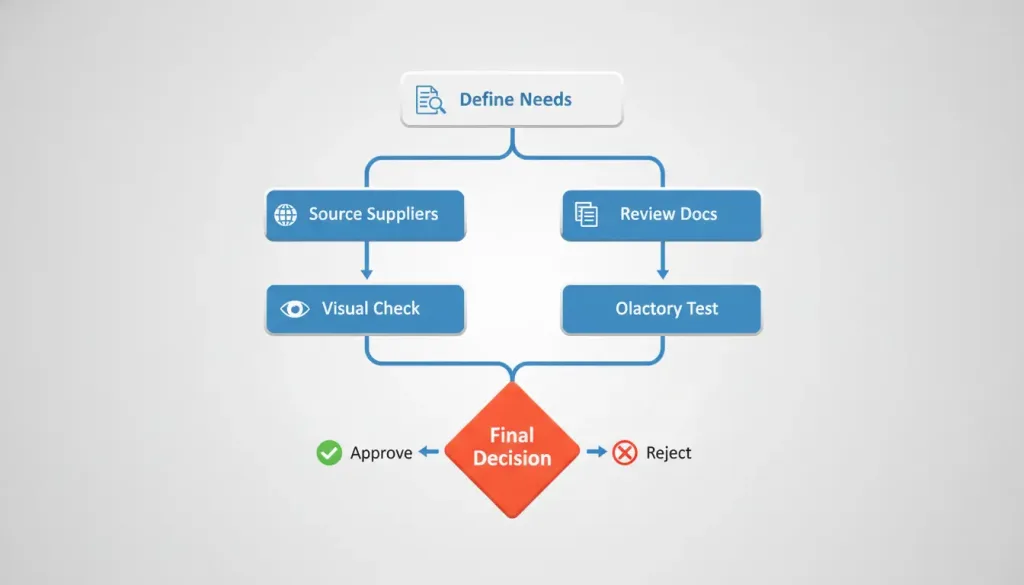
Sensory Evaluation of Taif Rose Essential Oil
This topic explains how professionals test and judge oil quality.
Why Sensory Evaluation is Needed
Because Taif Rose oil is expensive and easily adulterated.
What Is Sensory Evaluation?
Testing the oil using:
-
Sight (color, clarity)
-
Smell (aroma profile, purity)
-
Behavior (congeals at cool temp, evaporates cleanly)

Key Steps in Professional Sensory Evaluation
1️⃣ Visual Inspection
-
Color → golden/greenish
-
Clarity → no cloudiness
-
Congealing → becomes semi-solid around 16°C (real rose otto does this)
2️⃣ Olfactory (Smell) Testing
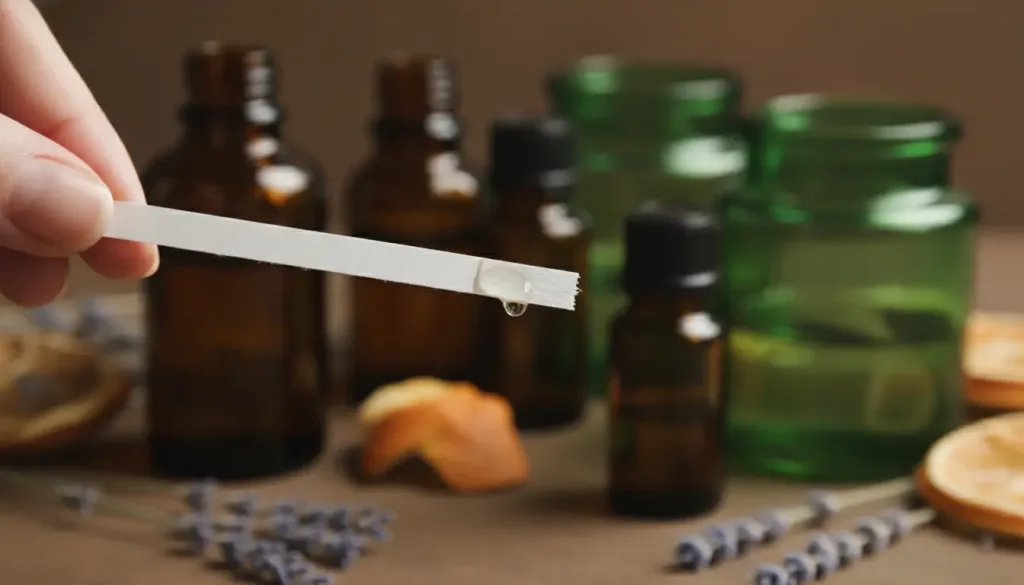
Experts smell the oil using blotter strips:
-
Top notes → citrus, green, lychee
-
Heart notes → honey, floral, powder
-
Base notes → soft powder, tea-like warmth
Trained panels look for:
-
Complexity
-
Depth
-
Duration
-
Authentic rose character
3️⃣ Discrimination Tests
Compare:
-
A real sample vs. a suspect sample
-
Multiple batches
-
Intensity differences
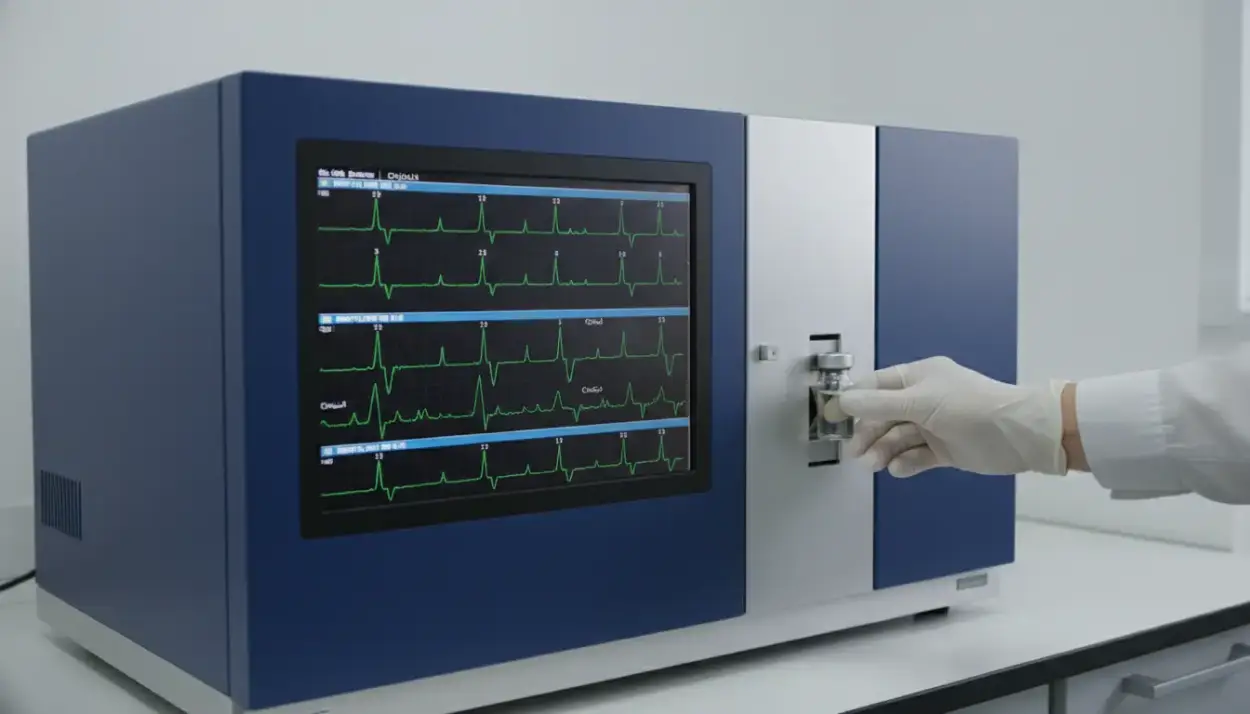
4️⃣ GC/MS Chemical Testing
Confirms:
-
Purity
-
No synthetic additions
-
Correct chemical ratios
(This supports, not replaces, sensory evaluation.)
Visual Inspection (Appearance Check)
This is the first and simplest step in evaluation.

What experts look for:
• Color → Taif rose oil should show a golden–amber or greenish tint.
• Clarity → Must be clear, no cloudiness or sediment.
• Consistency → Should look uniform, not layered or separated.
Why it matters:
If the oil looks strange, cloudy, or too pale/dark → it may be old, degraded, or adulterated.
Physical Properties (Purity Behavior Test)
Key checks:
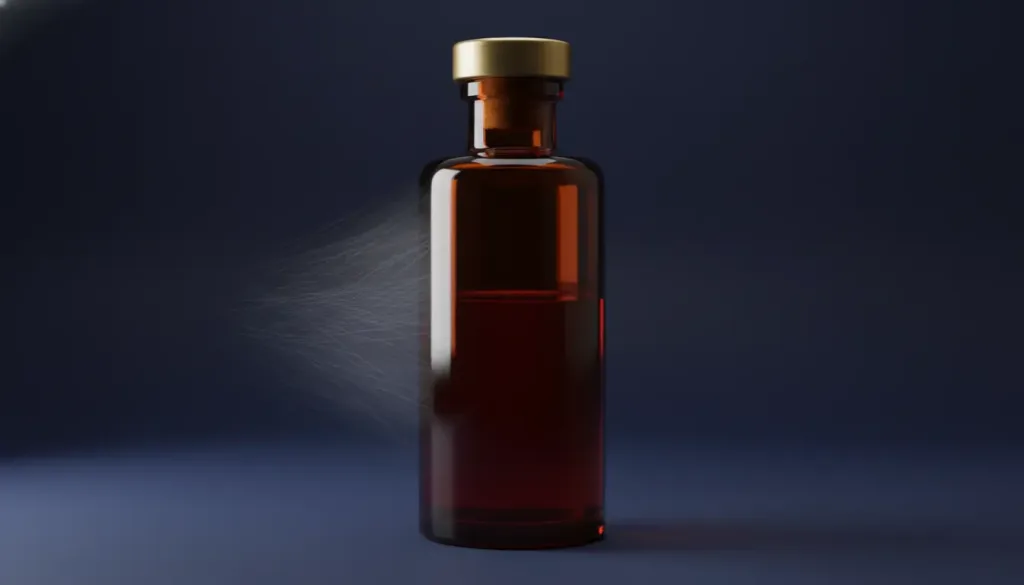
• Congealing Test → Real Rose Otto solidifies around 16°C due to natural waxes.
If it stays liquid in cold → possible mixing or dilution.
• Viscosity → Must feel silky, not heavy or greasy.
• Evaporation Test → Should evaporate cleanly on a strip without oily residue.
Why it matters:
These physical behaviors are nearly impossible to fake and help confirm purity.
Why do we check the appearance of Taif Rose Oil?
We check how the oil looks because the color and clarity can show if the oil is pure or fake.
• Real Taif Rose Oil usually has a golden, amber, or greenish tint.
• If the oil looks cloudy, too pale, too dark, or completely clear, it may be low quality or mixed with other substances.
Why is clarity important?
Pure oil should look clean and clear.
• Cloudiness = water contamination or bad storage
• Sediment = poor filtration or old oil
A clean oil shows careful distillation and high quality.
What does viscosity tell us?
Viscosity means how thick or thin the oil is.
Real Taif Rose (Rose Otto):
• Thickens and becomes solid around 16°C because of natural waxes
If it stays liquid at cold temperatures → possible dilution or adulteration.
The Most Important Test: How Should It Smell? (Olfactory Test)
Smell tells you the truth about rose oil more than anything else.
Real Taif Rose oil smells:
-
Sweet and floral
-
Lychee-like
-
Green and fresh
-
Slightly spicy
-
Soft & luxurious, not sharp or chemical
Fake oil smells:
-
Too sweet
-
Too sharp
-
Like perfume
-
Flat (no depth)
Beginner tip:
Put 1 drop on a blotter/paper strip and smell it over time:
-
Top notes (first 1–5 min): fresh, citrusy, lychee
-
Middle notes (10–30 min): rich floral, honey-powder
-
Base notes (1–2 hrs+): warm tea-like, soft powder
A TRUE Taif Rose evolves beautifully over hours.
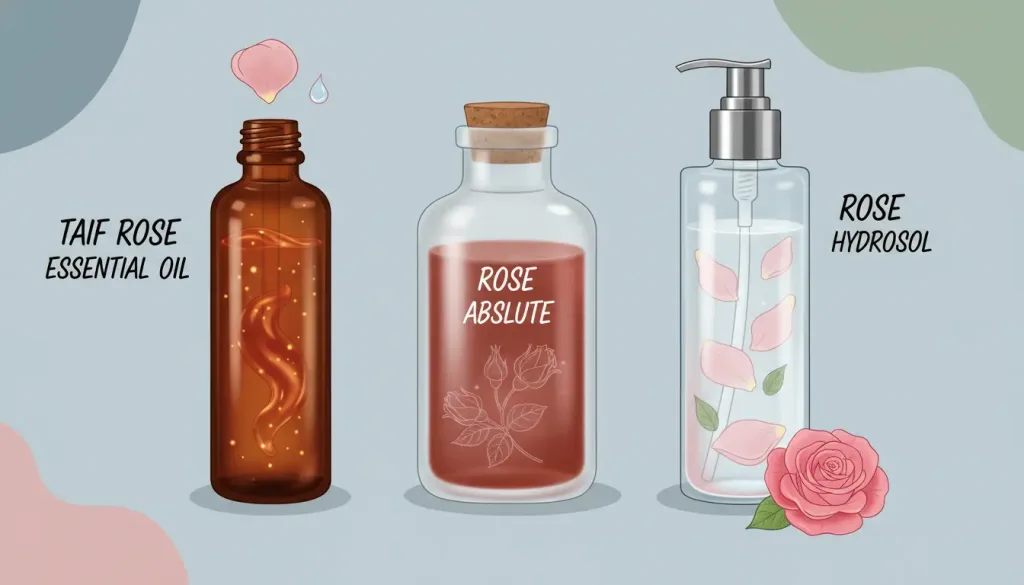
Aroma Profiling
Aroma profiling means slowly smelling the oil at different stages to understand its character.
What are top notes?
Top notes are the first smell you notice. They are light and fresh.
For Taif Rose Oil:
• Sweet
• Juicy lychee
• Green and citrus-like
• A bit metallic
These notes fade quickly but show the freshness of the oil.
What are heart notes?
Heart notes appear after a few minutes. They show the true “rose” character.
For Taif Rose Oil:
• Deep rosy-pink smell
• Honey-like softness
• Powdery feel
• A little spicy (like pink pepper)
These notes tell if the rose oil is rich and complex.
What are base notes?
Base notes are the smells that stay the longest.
Taif Rose base notes:
• Warm powder
• Soft tea-like scent
• Long-lasting aroma (8–12 hours)
Strong base notes mean the oil is high quality and pure.
What Are Common Red Flags? (Beginner Warning Signs)
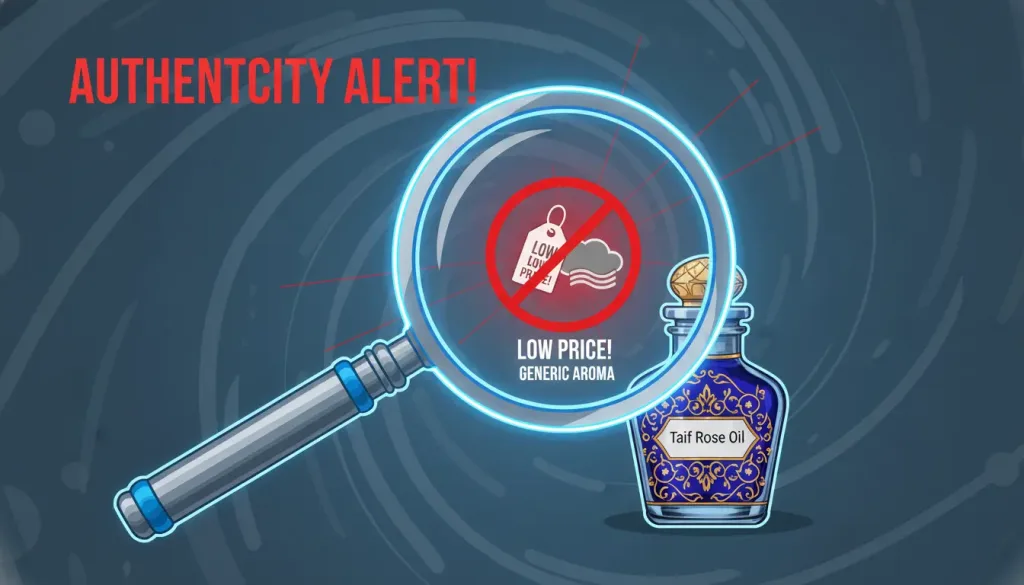
Avoid oils that show these problems:
Visual Red Flags:
-
Cloudy
-
Completely clear like water
-
Too dark brown
-
Does NOT thicken when cold
Smell Red Flags:
-
Smells like perfume
-
Smells alcoholic
-
One-dimensional (no layers)
-
Too sharp or too sweet
Vendor Red Flags:
-
No GC/MS report
-
Unusually cheap price
-
No origin information
-
Clear bottle with too much light exposure
These usually indicate fake or heavily diluted oil.
Panel Testing (Trained “Expert Nose” Evaluation)
Who performs this:
• Perfumers
• Sensory specialists
• Trained evaluators with high smell sensitivity
What they do:
• Use standardized rose vocabulary
• Detect off-notes (synthetic, metallic, flat, sharp)
• Score aroma intensity and evolution
• Compare samples with a reference oil
Why it matters:
Humans with trained noses detect issues machines cannot.
Controlled Environment Testing
Required environmental setup:
• Odor-free test room
• Neutral air (no perfumes, food smells, humidity issues)
• Consistent temperature and lighting
• Individual test booths for unbiased smelling
• Blotter strips used for aroma evolution tracking
Why it matters:
External smells or temperature changes can distort the aroma → making the evaluation unfair or inaccurate.
Supporting Chemical Analysis (Scientific Confirmation)
Sensory evaluation is powerful, but experts also use scientific tools to confirm purity.
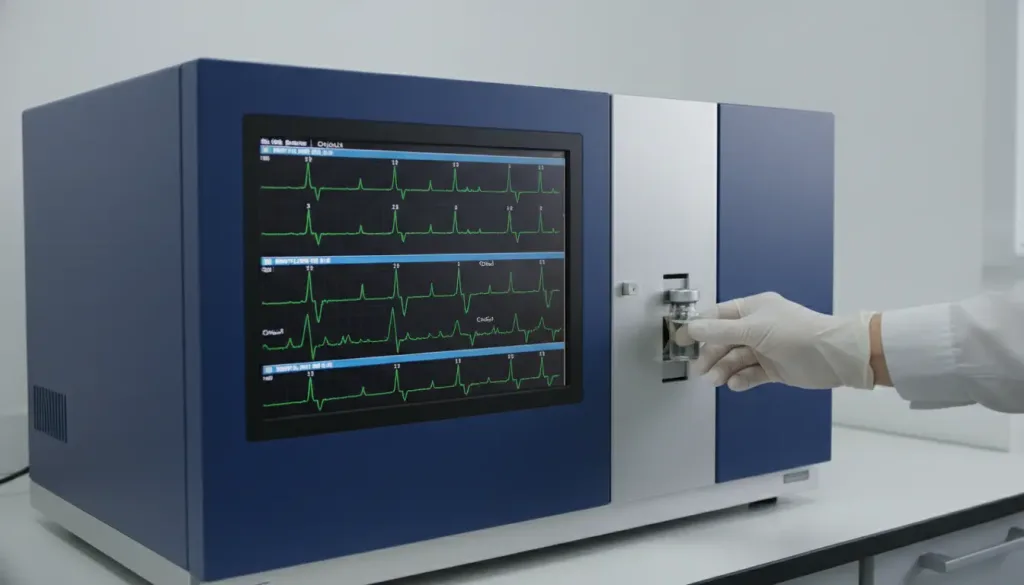
Key analytical methods:
• GC–MS (Gas Chromatography–Mass Spectrometry)
Identifies real Taif Rose chemical markers like:
– Citronellol
– Geraniol
– Nerol
– Phenyl ethyl alcohol
– Hydrocarbons (nonadecane, heneicosane)
• Refractive Index
• Specific Gravity
• Optical Rotation

Why it matters:
Even if fake oils smell similar, their chemistry never matches true Taif Rose.