
Armoise essential oil, also called mugwort essential oil, is a steam-distilled oil from Artemisia vulgaris. This organic oil is made from leaves and flowering tops and is listed as originating from Nepal. It has a strong, camphoraceous-sweet herbal aroma and is primarily used in aromatherapy, perfumery, soap and personal-care formulations.

Armoise Essential Oil Quality, Chemistry and Safety
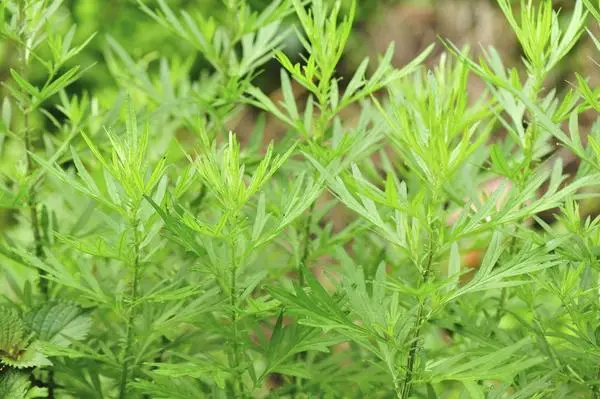
Description: Organic Armoise Essential Oil is a steam-distilled oil from Artemisia vulgaris, commonly known as mugwort. Organic Armoise (Mugwort) is an aromatic perennial herb that has red-purple stems and extremely hack, shady green leaves with white undersides. It is pale yellow color in appearance and has camphoraceous & sweet scent with strong aroma. The oil has all the active ingredients that work well in the treatment of rheumatism, neuralgia and arthritis. Armoise essential oil is used in aromatherapy as it has camphoraceous & sweet scent with strong aroma. It has calming effects that make it effective in problems of depression, anxiety or fatigue. It is used in fragrances of soaps, colognes and perfumery. Armoise essential oil is widely used for treating painful or obstructed menstruation, hysteria and epilepsy.
Key takeaways
Botanical name : Artemisia Vulgaris
Common name: Armoise; mugwort
Type: Organic
Plant Part: Leaves and flowering tops
Extraction Method: Steam Distilled
Odor and Appearance : Pale yellow color in appearance and has camphoraceous & sweet scent with strong aroma.
County of origin : Nepal
Main Constituents: α-thujone, β-thujone, 1,8-cineole (eucalyptol), camphor, and borneol
Common Uses: The essential oil is commonly used in aromatherapy for relaxation and stress relief. It supports digestion and helps ease menstrual discomfort. It can also act as a natural insect repellent and soothe minor skin irritations.
Note: Middle note
Blends well with: Some oils that blend well with armoise essential oil include lavender, clary sage, cedarwood, lemon, and bergamot. These combinations offer a unique and pleasant fragrance suitable for aromatherapy and personal care products.
Contraindications: Caution is necessary due to the presence of thujone, and consulting a qualified professional before use is advised, especially for pregnant people. Individuals with epilepsy or a history of seizures should also steer clear of this oil. Allergic reactions may occur, so a patch test is recommended before topical use. Armoise oil can increase skin sensitivity to sunlight, making sun exposure after application a concern. It should not be used on children, infants, or ingested. People with medical conditions or those taking medications should seek advice from a healthcare professional before using armoise oil. It’s crucial to exercise caution and consult an expert for proper and safe use of this essential oil.
What is armoise essential oil?
Armoise essential oil is the volatile oil obtained from Artemisia vulgaris, a perennial aromatic plant commonly called mugwort. The oil is used primarily as an aromatic ingredient in applications such as perfumery, aromatherapy and personal-care formulation.
Artemisia vulgaris belongs to the Asteraceae family. The plant is native to Europe and parts of Asia and Africa and is now found in many regions, including North America. NCCIH identifies Artemisia vulgaris as the botanical name for mugwort.
The essential oil should not be confused with every other oil made from the Artemisia genus. Different Artemisia species can have substantially different chemical profiles and safety considerations.
Is armoise essential oil the same as mugwort essential oil?
Yes. In the context of this product, armoise essential oil refers to essential oil from Artemisia vulgaris, the plant commonly known as mugwort.
The names “armoise” and “mugwort” can create confusion because common names vary between suppliers and regions. For accurate purchasing and formulation work, the botanical name Artemisia vulgaris is more useful than the common name alone.
Botanical identity and extraction method
This product is identified as Artemisia vulgaris, with leaves and flowering tops listed as the plant material and steam distillation listed as the extraction method.
Product specifications
| Specification | Product information |
|---|---|
| Botanical name | Artemisia vulgaris |
| Common name | Armoise / Mugwort |
| Product type | Organic essential oil |
| Plant part | Leaves and flowering tops |
| Extraction method | Steam distilled |
| Listed origin | Nepal |
| Appearance | Pale yellow |
| Odor | Camphoraceous, sweet, strong aroma |
| Note | Middle note |
| SKU | 328-P |
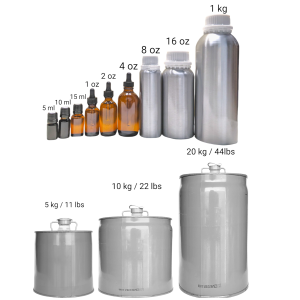
The supplier currently lists package options from 15 ml through 5 kg / 11 lb, with a 10 kg / 22 lb option also shown in the product selector. Product pricing should be treated as live ecommerce information because prices can change.
What does armoise essential oil smell like?
Armoise essential oil has a strong herbal aroma described by the supplier as camphoraceous and sweet. It is listed as a middle note and can contribute a distinctive herbal character to aromatic blends.
The aroma can vary between oils because the volatile composition of Artemisia vulgaris is affected by factors such as geographic origin, plant material, harvest conditions and chemotype.
What compounds are found in armoise essential oil?
The product page lists α-thujone, β-thujone, 1,8-cineole (eucalyptol), camphor and borneol among its main constituents. These should be understood as product-specific information rather than a universal chemical profile for every Artemisia vulgaris essential oil.
Published research demonstrates substantial chemical variation. A study of A. vulgaris oils from Nepal reported sabinene, β-thujone, camphor, borneol and germacrene D among its major compounds. Another study of 44 wild populations in Lithuania identified multiple chemical groupings and substantial variation among oils.
This variation is important when comparing suppliers. A batch-specific GC-MS report or certificate of analysis is more informative than assuming that every mugwort oil has the same percentages of constituents.
How is armoise essential oil used?
Armoise essential oil is primarily relevant as an aromatic raw material for carefully formulated applications, including aromatherapy, perfumery, soaps and other personal-care products.
For professional formulation, use the supplier’s current safety documentation and batch-specific analytical information rather than relying only on a general essential-oil profile.
Aromatherapy
Armoise can be incorporated into aromatic blends where its strong herbal, camphoraceous character is desired. Because A. vulgaris oil can contain thujone, it is a specialized oil that warrants greater safety consideration than simply treating it as an ordinary household fragrance oil.
Perfumery
The strong herbal and camphoraceous profile can provide character to unusual herbal, green or aromatic compositions. It can be evaluated alongside other middle-note materials during formulation.
Soap and personal-care formulation
The product page identifies soap, cologne and perfumery applications. Formulators should determine the appropriate finished-product concentration from current supplier safety documentation and applicable fragrance/essential-oil standards rather than using an arbitrary concentration.
Which essential oils blend well with armoise?
The supplier identifies lavender, clary sage, cedarwood, lemon and bergamot as oils that blend well with armoise.
These combinations can be used as starting points for formulation experiments, but the final blend should be evaluated for aroma balance, intended application and safety.
| Armoise pairing | Formulation direction |
|---|---|
| Lavender | Soft herbal/aromatic direction |
| Clary sage | Herbal, earthy and aromatic direction |
| Cedarwood | Woody and grounding direction |
| Lemon | Fresh citrus-herbal direction |
| Bergamot | Citrus, floral and aromatic direction |
Is armoise essential oil safe?
Armoise essential oil requires caution, particularly because Artemisia vulgaris oils can contain thujone and because chemical composition varies between oils.
The product page specifically advises against ingestion and recommends caution for pregnancy, people with epilepsy or a history of seizures, children and infants. It also recommends professional advice for people with medical conditions or those taking medication.
NCCIH states that there is not enough evidence to determine whether mugwort is safe or useful for health conditions and specifically advises against using mugwort during pregnancy. These cautions make it inappropriate to market armoise essential oil as a proven treatment for anxiety, depression, arthritis, menstrual disorders, epilepsy or other diseases.
For external formulation: follow current supplier safety documentation, use appropriate dilution, avoid ingestion, and obtain professional advice where contraindications or medication interactions may be relevant.
Does armoise essential oil contain thujone?
It can. The product page lists both α-thujone and β-thujone among its main constituents.
The exact amount should not be assumed from the species name alone. Research has demonstrated considerable chemical variability in Artemisia vulgaris oils, with thujone levels differing according to location and chemotype.
For commercial formulation, the most useful evidence is a current batch-specific GC-MS analysis or certificate of analysis from the supplier.
What does current research say about mugwort essential oil?
Research confirms that Artemisia vulgaris essential oil contains a complex mixture of volatile compounds, but the composition is not fixed.
For example, a PubMed-indexed study of A. vulgaris from Nepal identified 24 compounds and reported β-thujone, sabinene, camphor, borneol and germacrene D among the major constituents. Another study found substantial chemical polymorphism among 44 Lithuanian populations. Research from India has likewise identified different dominant constituents in oils from different plant populations.
These findings support a cautious conclusion: Artemisia vulgaris essential oil is chemically diverse, and claims about a specific oil should be tied to its actual origin and analytical data.
NCCIH also notes that very little research has been conducted in humans on mugwort and that there is insufficient evidence to establish its usefulness or safety for health conditions.
Armoise essential oil vs. other Artemisia oils
Armoise should be identified by its botanical name rather than simply by the word “Artemisia.”
| Oil | Botanical identity | Key consideration |
|---|---|---|
| Armoise / Mugwort | Artemisia vulgaris | Chemical composition can vary substantially by origin and chemotype |
| Other Artemisia oils | Different Artemisia species | Should not be assumed chemically or functionally equivalent |
| Product-specific armoise oil | Artemisia vulgaris | Batch origin and GC-MS data are important for formulation decisions |
This distinction matters because the Artemisia genus contains many species with different constituent profiles. A supplier should therefore identify the species clearly.
How much does armoise essential oil cost?
The current product page lists armoise essential oil in multiple sizes, from 15 ml through bulk quantities. At the time the page was retrieved, the displayed prices ranged from $23.20 for 15 ml to $1,131.90 for 5 kg / 11 lb.
The page also lists 1 fl oz, 2 fl oz, 4 fl oz, 8 oz, 16 oz and 1 kg / 2.2 lb options, with a 10 kg / 22 lb option available in the selector.
Because ecommerce pricing and inventory can change, the live product selector should be treated as the authoritative source for the current purchase price.
What should you look for when buying armoise essential oil?
Look for a clearly identified botanical species, extraction method, plant part and country of origin. For professional or commercial use, batch-specific analytical documentation is especially valuable.
A quality purchasing checklist should include:
- Botanical name: Artemisia vulgaris
- Plant part: clearly identified
- Extraction method: clearly identified
- Country of origin: disclosed
- Batch identification: available for commercial orders
- GC-MS or comparable analytical documentation: preferably available
- Safety documentation: appropriate for the intended application
- Organic claim: supported by appropriate certification when certification is important to the buyer
The word “organic” should not by itself be treated as evidence of a particular chemical composition or therapeutic effect.
Where can you buy armoise essential oil in the U.S.?
Get Natural Essential Oils currently offers organic armoise essential oil online in retail and bulk sizes, with the product page listing the supplier’s Manassas, Virginia location.
For larger commercial requirements, the supplier specifically instructs customers to contact the company for large quantities.
When comparing U.S. suppliers, prioritize botanical identity, batch documentation, safety information, origin and consistency of supply rather than price alone.
Key safety limitations
Armoise essential oil should not be presented as a treatment for disease. The existing product page contains traditional/marketing claims concerning rheumatism, neuralgia, arthritis, depression, anxiety, fatigue, menstruation and epilepsy; these claims should be removed or rewritten as historical/traditional-use statements unless supported by appropriate clinical evidence.
NCCIH states that there is insufficient evidence to determine whether mugwort is safe or useful for health conditions and advises against its use during pregnancy.
Do not ingest this essential oil. Keep it away from children and infants, and consult an appropriately qualified healthcare professional before use if you are pregnant, have a seizure disorder, have a medical condition, or take medication.
FAQ
Is armoise essential oil the same as mugwort essential oil?
For this product, yes. Both names refer to Artemisia vulgaris. Botanical identification is the best way to distinguish this oil from other Artemisia species.
What is armoise essential oil used for?
It is primarily used as an aromatic ingredient in aromatherapy, perfumery, soaps and personal-care formulations. It should not be marketed as a proven treatment for medical conditions because human evidence for mugwort is limited.
Does armoise essential oil contain thujone?
Yes, Artemisia vulgaris essential oils can contain α-thujone and/or β-thujone, and this product page lists both. The actual concentration can vary considerably between batches and origins, so batch-specific analytical data are preferable.
Can you ingest armoise essential oil?
No. This product should not be ingested. The supplier specifically advises against ingestion, and the presence of biologically active constituents such as thujone warrants caution.
Can armoise essential oil be used during pregnancy?
Pregnancy is a situation in which armoise/mugwort should be avoided unless a qualified healthcare professional specifically advises otherwise. NCCIH states that mugwort should not be used during pregnancy.
What does armoise essential oil smell like?
It has a strong herbal aroma described as camphoraceous and sweet. It is listed as a middle note and can contribute a distinctive herbal character to aromatic formulations.
What oils blend with armoise essential oil?
The supplier lists lavender, clary sage, cedarwood, lemon and bergamot as compatible blending options. The final blend should be evaluated for aroma, intended use and safety.
Is armoise essential oil suitable for commercial formulation?
It can be considered as a specialized aromatic raw material, but commercial formulators should obtain current safety information and, where possible, batch-specific GC-MS/COA documentation. Regulatory and safety requirements depend on the finished product and its intended use.
Author expertise
This page should identify an author or technical reviewer with demonstrable experience in essential-oil sourcing, botanical raw materials, aromatherapy formulation, perfumery or cosmetic formulation.
For maximum trust, the author profile should state relevant professional experience and should distinguish supplier/product knowledge from medical claims. Where available, the page should also link to batch documentation, GC-MS reports, certificates of analysis and applicable safety documentation.
Sources
- National Center for Complementary and Integrative Health (NCCIH) — Mugwort (Artemisia vulgaris): background, evidence and safety. NCCIH: Mugwort
- PubMed / National Library of Medicine — Chemical composition and biological activity research on Artemisia vulgaris. PubMed: Artemisia vulgaris essential-oil research
- PubMed / National Library of Medicine — Essential-oil analysis of Artemisia vulgaris. PubMed: Artemisia vulgaris essential-oil analysis
- PubMed / Wiley — Chemical polymorphism of Artemisia vulgaris essential oils. PubMed: Chemical polymorphism of Artemisia vulgaris oils
- Get Natural Essential Oils — Product specifications, sizes and current product information. Armoise Essential Oil product page
These statements have not been evaluated by the Food and Drug Administration. This product is not intended to diagnose, treat, cure, or prevent any disease.
For large quantities please contact us via our phone number or through the Contact Us page.
Like us on Facebook.
 |
Add a review
 Armoise Essential Oil (Organic)
Your review
* Review is required
Name
* Name is required
Email
* Email is required
Add photos or video to your review
* Please tick the checkbox to proceed



Reviews
There are no reviews yet