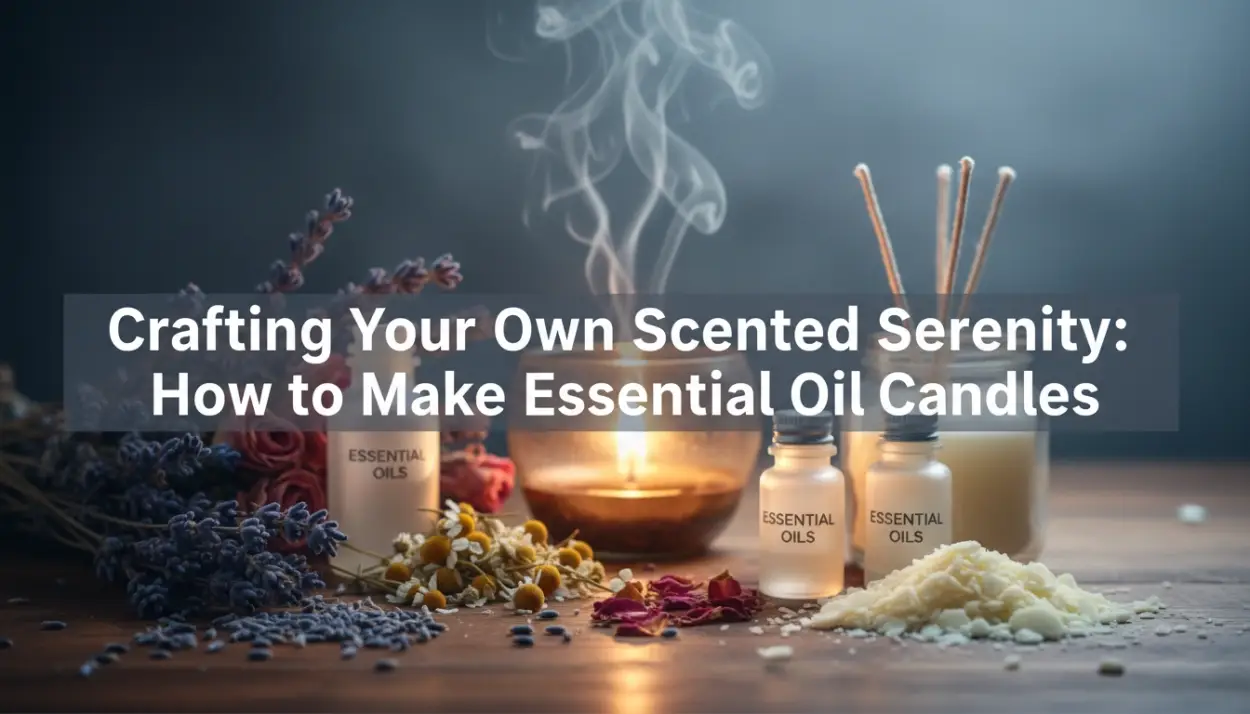


If you’ve been wondering how to make essential oil candles that actually smell strong and burn properly — this complete guide walks you through every step.
We’ll cover:
• The correct essential oil to wax ratio for candles
• How much essential oil to add to soy wax candles
• Temperature guide for adding oils
• Curing time for maximum scent throw
• Common mistakes to avoid
Let’s start from the beginning.

Introduction
Making your own essential oil candles allows you to:
• Control ingredients
• Avoid synthetic fragrances
• Customize scent blends
• Create clean-label, natural candles
But success depends on three things:
✔ Accurate measurements
✔ Proper temperature control
✔ Adequate cure time
Follow this tutorial carefully and you’ll avoid the most common candle-making mistakes.

Step 1: Gather Your Equipment and Ingredients
Before you begin, make sure you have everything ready.
🧰 Equipment Checklist
• Natural wax (Soy, Beeswax, or Coconut)
• Candle wicks (correct size for container diameter)
• Heat-safe containers
• Pouring pot or double boiler
• Thermometer (digital preferred)
• Kitchen scale (required for accuracy)
• Stirring utensil
🌿 Choosing Your Essential Oils
When selecting oils:
• Choose strong-performing oils (lavender, peppermint, patchouli, lemongrass)
• Blend top, middle, and base notes
• Avoid very low flash point oils unless carefully tested
Prep your workspace:
• Clear surface
• Good ventilation
• Paper towels nearby
• Heat-safe area

Step 2: Calculate Wax and Essential Oil Amounts
This is where many beginners go wrong.
You must calculate by weight — not volume.
📏 How Much Wax Do You Need?
Weigh your empty container.
Fill it with water and weigh again.
Subtract container weight.
Multiply water weight by 0.86 to estimate wax weight.
📊 Essential Oil to Wax Ratio for Candles
Standard fragrance load: 6–10%
For soy wax:
8–9% typically performs best.
🧮 Example Calculation
8 oz candle with 8% fragrance load:
8 oz × 0.08 = 0.64 oz essential oil
For 16 oz wax:
16 oz × 0.08 = 1.28 oz essential oil
This ensures proper scent without overloading wax.
Step 3: Melt the Wax and Prepare the Wick
🔥 Melting Wax Safely
Use a double boiler method.
Never melt wax directly on high heat.
Heat soy wax to around 170–185°F.
🕯 Securing the Wick
• Attach wick to container bottom
• Center it carefully
• Use a wick holder or pencil across the top
A centered wick ensures an even melt pool.

Step 4: The Critical Step – Adding Essential Oils
This is the most important part of essential oil candle making.
🌡 Temperature Guide
For soy wax:
Add essential oils at 180–185°F (82–85°C)
Why?
• Hot enough for binding
• Not so hot that scent burns off
For beeswax:
Add slightly lower, around 170–175°F
🌀 Stirring Technique
• Stir gently but continuously
• Minimum 2 full minutes
• Avoid splashing
Proper stirring ensures fragrance binds evenly to wax molecules.
Adding oils too hot causes evaporation.
Adding oils too cool causes poor binding.
Temperature control is everything.

Step 5: Pouring and Curing Your Candle
🫗 Pouring
• Pour slowly and steadily
• Avoid air bubbles
• Leave ½ inch space at top
Let cool at room temperature.
Avoid drafts.
🔧 Fixing Surface Imperfections
If cracks or sinkholes appear:
• Use a heat gun lightly
• Or perform a small second pour
⏳ The Curing Process
Curing improves scent throw dramatically.
Recommended cure time:
• Minimum: 7 days
• Ideal: 14 days
Do not judge hot throw before curing.
✂ Before First Burn
Trim wick to ¼ inch.
This prevents:
• Excess soot
• Large flames
• Mushrooming
Essential Oil Candle Temperature Quick Guide
| Wax Type | Melt Temp | Add Oil Temp | Pour Temp |
|---|---|---|---|
| Soy | 170–185°F | 180–185°F | 135–145°F |
| Beeswax | 160–170°F | 170–175°F | 145–155°F |
| Coconut | 170–180°F | 175–180°F | 130–140°F |
Always confirm with your specific wax manufacturer.
Common Beginner Mistakes
Avoid these:
• Guessing fragrance load
• Adding oils above 190°F
• Not curing long enough
• Using wrong wick size
• Overfilling containers
Testing small batches first is best practice.
FAQ
What temperature should I add essential oils to soy wax?
For soy wax, add oils at 180–185°F (82–85°C).
This allows proper binding without burning off delicate scent compounds.
How do I calculate how much essential oil I need?
Multiply wax weight by fragrance load.
Example:
16 oz wax × 0.08 (8%) = 1.28 oz essential oil
Use a digital scale for accuracy.
Conclusion
Now you know exactly how to make essential oil candles the right way.
Success comes down to:
• Correct essential oil to wax ratio
• Precise temperature control
• Proper stirring
• Adequate cure time
• Wick testing
Take your time. Record your results. Adjust slowly.
That’s how hobbyists become skilled candle makers.