

Have you ever wondered why aloe vera gel is found in so many skincare and personal-care products?
The answer starts with the plant itself. Aloe vera gel is a water-rich substance from the inner part of the aloe leaf. It has a long history of topical use and is commonly included in products designed to moisturize, soothe, and refresh the skin. Research supports some topical uses, although evidence varies depending on the condition and product.
What Is Aloe Vera Gel?
So, where does aloe vera gel actually come from?
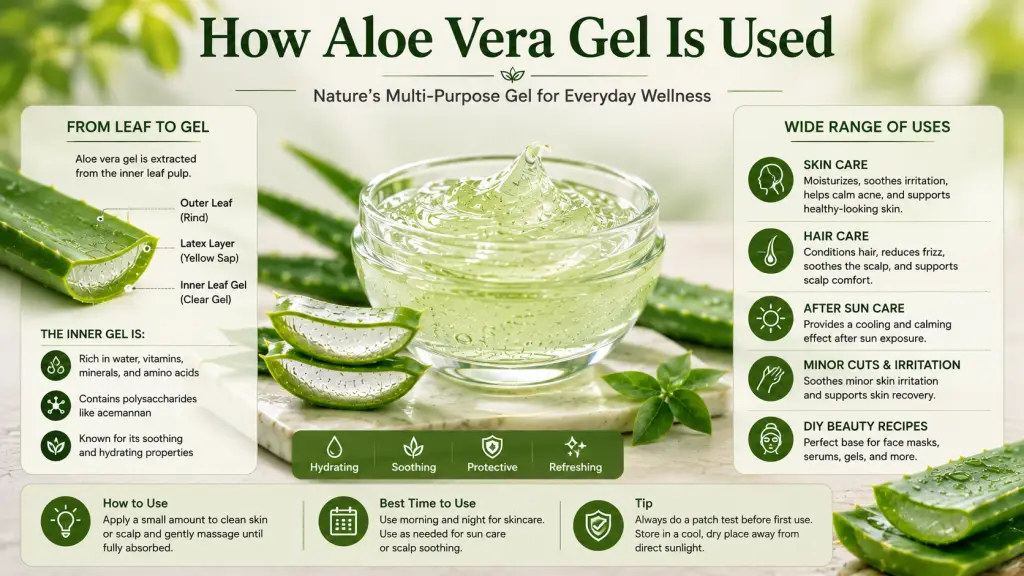
The plant is commonly known as Aloe vera or Aloe barbadensis. When a mature leaf is cut open, it contains a clear inner gel surrounded by the outer leaf layers and latex.
Why does that distinction matter?
The inner-leaf gel is the part most commonly used in topical cosmetic products. Aloe products can differ considerably depending on which part of the leaf is processed.
The gel contains water, polysaccharides, amino acids, minerals, and other naturally occurring compounds. One important aloe polysaccharide is acemannan, which contributes to the gel’s characteristic texture.
Aloe has also been used traditionally for skin conditions for centuries, including in ancient Greece, Rome, Babylonia, and China.
What Are the Core Benefits of Aloe Vera Gel?
What makes aloe vera so popular in skincare?
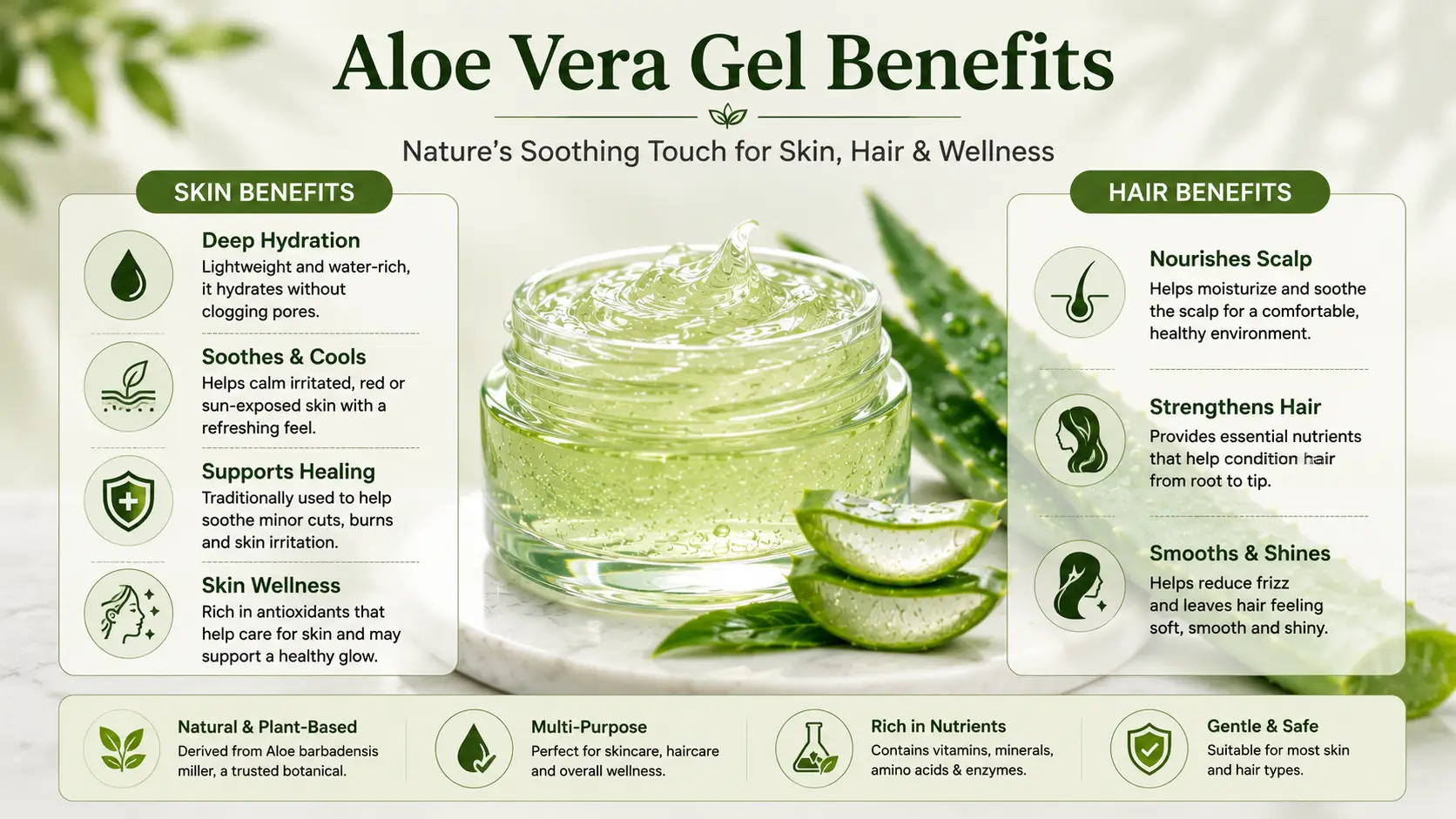
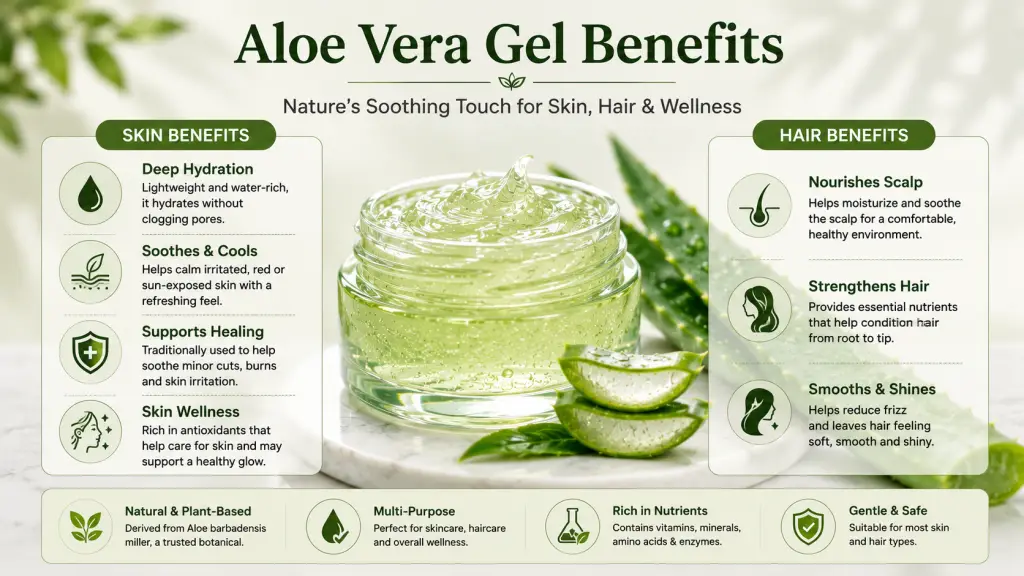
Its biggest appeal is its lightweight, water-rich texture. Applied topically, aloe gel can leave skin feeling moisturized without the heavier feel of many creams.
Research also suggests that topical aloe may help with certain skin concerns. For example, clinical evidence indicates that aloe gel may support burn healing, while smaller studies have explored its use for acne and other skin conditions.
Benefits for Skin
Could aloe vera gel be useful in a daily skincare routine?
For many people, yes. It can provide a light moisturizing layer and a soothing feel on irritated skin.
Aloe has also been studied as a complementary treatment for burns. A 2024 systematic review and meta-analysis of randomized trials found faster healing in second-degree burns compared with other topical treatments, although results should not be treated as a reason to replace professional burn care.
For acne, the evidence is more limited. NCCIH notes that two small studies found possible benefits when topical aloe was combined with other treatments.
Claims about reversing wrinkles, preventing aging, or dramatically improving skin should therefore be treated cautiously.
Benefits for Hair
What about using aloe vera gel on your hair?
Aloe is commonly included in hair and scalp products because its lightweight, water-rich texture can help condition hair and provide a soothing application experience.
However, claims that aloe directly promotes hair growth or prevents hair loss are not well established by clinical evidence. It is better viewed as a conditioning or scalp-care ingredient rather than a proven hair-growth treatment.
How Do You Choose a High-Quality Aloe Vera Gel?
If two products both say “aloe vera gel,” how do you know which one is better?
Start with the ingredient list.
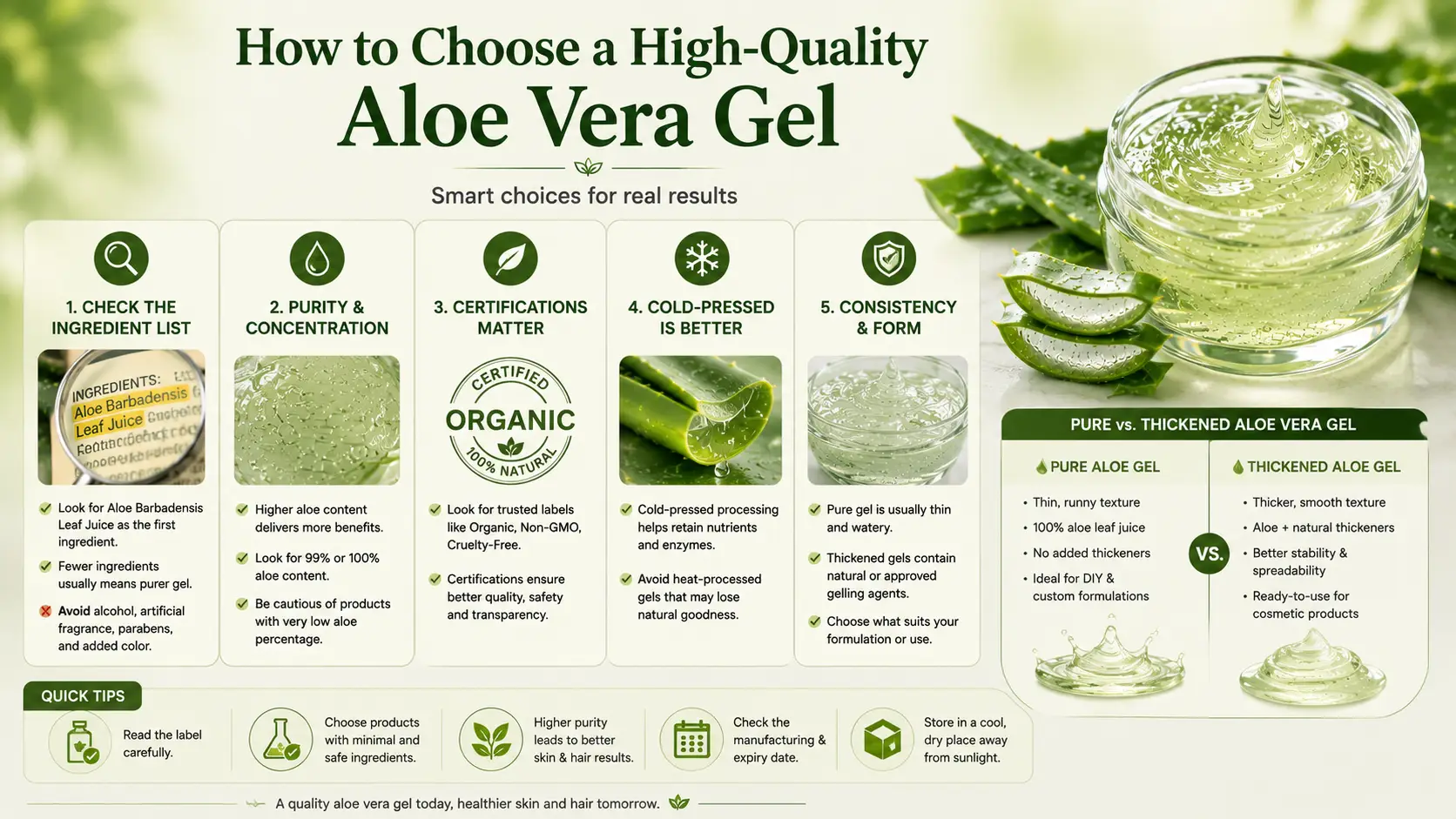
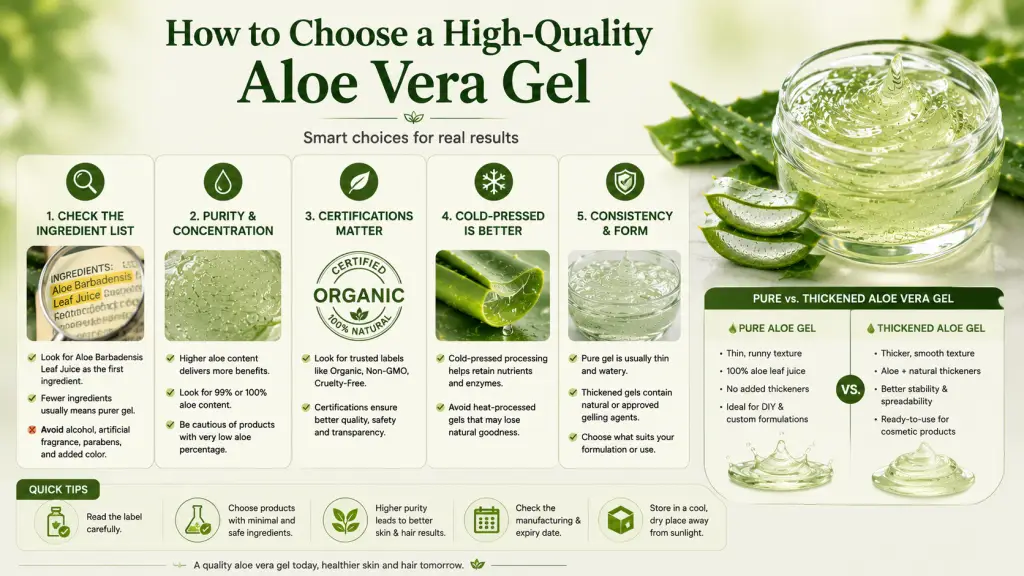
Look for a clearly identified aloe ingredient, such as Aloe Barbadensis Leaf Juice, and check what other ingredients have been added. Consider the aloe concentration, preservatives, fragrance, colorants, and whether the product is designed for your intended use.
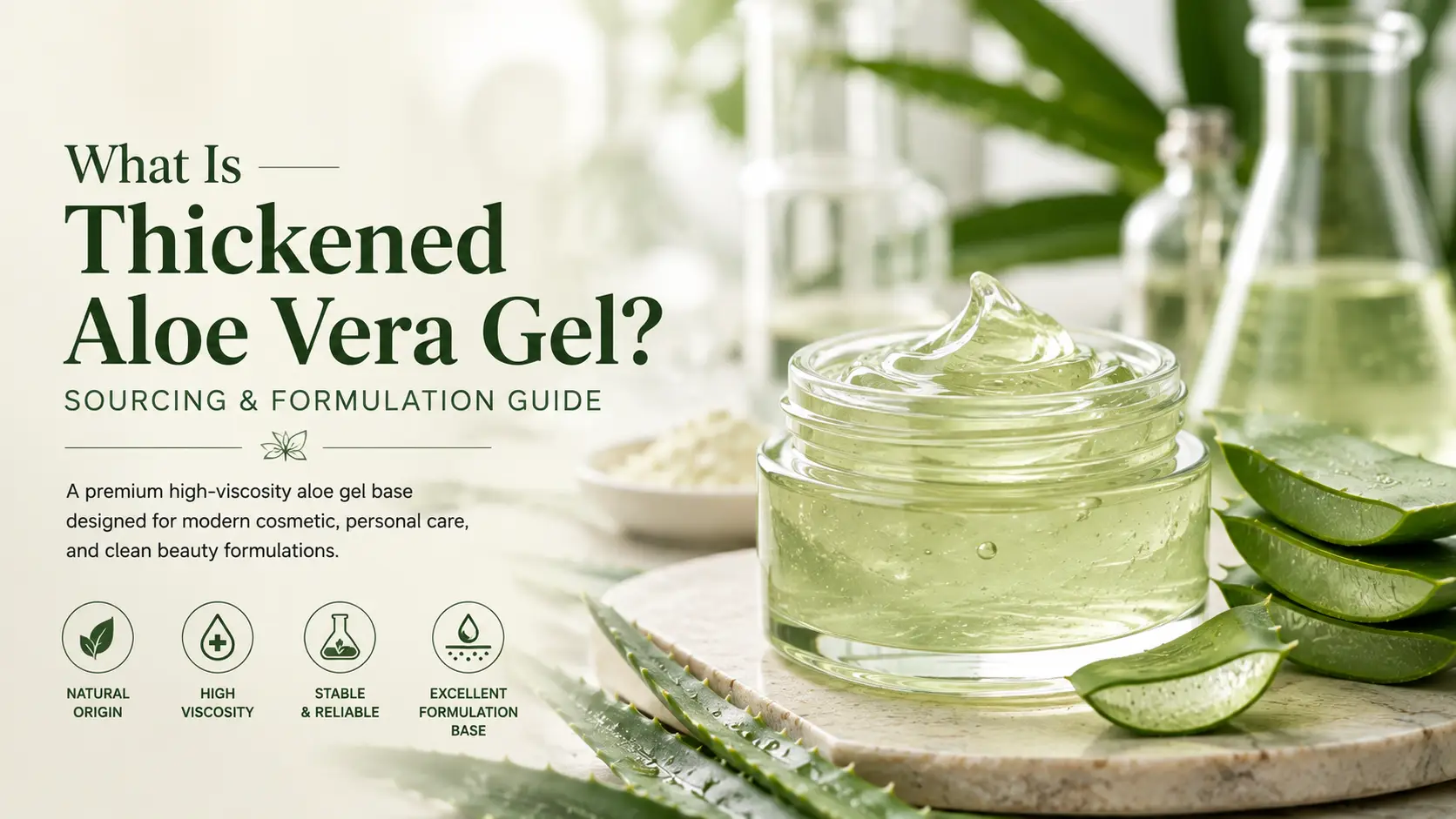
You may also see terms such as organic, cold-pressed, or thickened gel. These terms describe different aspects of sourcing or formulation, so they should not automatically be treated as proof that one product is superior.
Consistency matters too. A pure or minimally formulated gel may feel very different from a thickened aloe vera gel containing additional gelling agents.

Frequently Asked Questions
Can I use aloe vera gel on my face every day?
Many people tolerate topical aloe gel well, but irritation can occur. NCCIH reports occasional burning, itching, rash, and eczema. Patch testing is a sensible first step.
What is the difference between aloe vera gel and aloe vera juice?
Aloe gel is the clear inner-leaf material commonly used in topical products. Aloe juice is a processed liquid product and may be formulated for different purposes. Always check the product label rather than assuming they are interchangeable.
Does store-bought aloe vera gel expire?
Yes. Commercial aloe products have shelf-life specifications and should be stored according to the manufacturer’s instructions. Once expired or visibly spoiled, the product should not be used.
Conclusion
So, is aloe vera gel worth adding to your routine?
It can be a useful, lightweight botanical ingredient for moisturizing and soothing the skin, with some evidence supporting specific topical applications such as burn care.
The key is choosing the right product for the right purpose. Check the ingredient list, formulation, intended use, and shelf life rather than relying on aloe-related marketing claims alone.
Used thoughtfully, aloe vera gel can be a versatile addition to skincare, haircare, and personal-care formulations.