




Dry hair often feels rough, looks dull, and breaks easily. This usually happens when hair lacks natural moisture or struggles to hold onto it. The good news is that natural hair oils for dry hair offer a gentle, effective way to restore softness, shine, and strength.
This guide explains how natural hair oils work, which oils are best for dry hair, and how to use them correctly. By understanding their differences—such as penetrating oils versus sealing oils— you can choose the right oil for your hair type and build a routine that delivers lasting hydration.

Why Dry Hair Needs Natural Oils
What causes dry hair
Hair becomes dry when it loses moisture faster than it can retain it. Common causes include frequent washing, heat styling, chemical treatments, sun exposure, and naturally porous hair textures. For instance, high porosity hair absorbs moisture quickly but loses it just as fast, while low porosity hair struggles to let moisture in.
Without enough moisture, the hair cuticle lifts, leading to frizz, breakage, and a lack of shine. This is where the best oil for dry damaged hair becomes essential.
How natural oils help
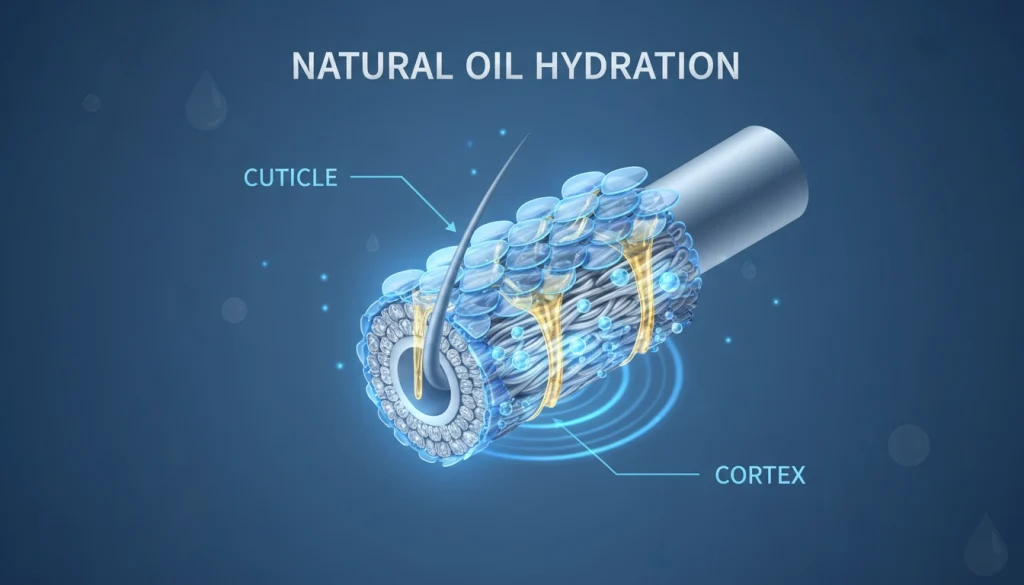
Natural oils work by sealing moisture into the hair shaft and protecting it from further dryness. Natural oils work by either penetrating the cortex to moisturize from within or coating the hair shaft to seal hydration in. Many natural oils for hair also deliver fatty acids (like oleic and linoleic acid), vitamins, and antioxidants that strengthen hair and support natural oil for dry scalp health.
Unlike synthetic products, natural oils nourish hair while helping it maintain balance over time. Integrating essential oils for dry hair can further boost these benefits.
Best Natural Hair Oils for Dry Hair
Coconut oil
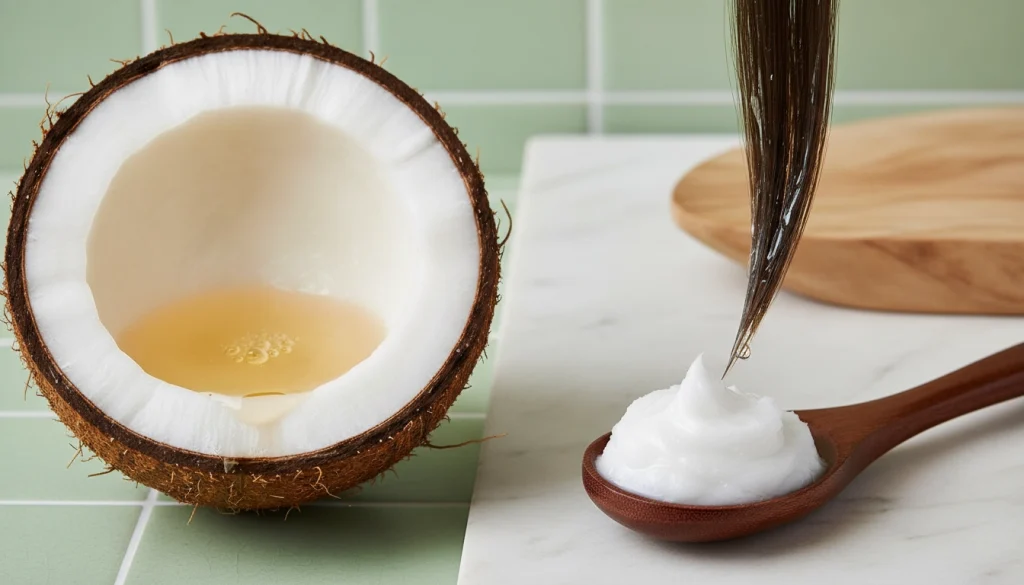
Coconut oil is known for its ability to penetrate the hair shaft deeply, thanks to its high lauric acid content. It helps reduce protein loss, which is important for maintaining hair strength.
Best for: Thick, coarse, or very dry hair (especially high porosity)
Main benefits: Deep hydration, frizz control, damage repair
Use tip: Apply as a pre-wash treatment or weekly mask
Note: May cause stiffness in protein-sensitive hair.
Argan oil
Often called “liquid gold,” Argan oil is lightweight but highly nourishing. It hydrates hair without leaving a greasy feel and helps smooth frizz while adding shine. It is rich in Vitamin E and antioxidants.

Best for: Most hair types, including curly and damaged hair
Main benefits: Moisture, shine, heat protection, hair oil for hydration.
Use tip: Apply a few drops to damp or dry ends as a leave-in conditioner oil
Jojoba oil
Jojoba oil is unique because it is a wax ester that closely resembles the scalp’s natural sebum. This makes it excellent for balancing moisture and supporting scalp comfort without clogging pores.

Best for: Dry hair with scalp issues and low porosity hair.
Main benefits: Moisture sealing, scalp balance, frizz reduction
Use tip: Massage lightly into scalp or use as a leave-in conditioner
Avocado oil
Avocado oil is rich in monounsaturated fats (oleic acid) and nutrients that deeply nourish dry, damaged hair. It is one of the few oils capable of penetrating the hair shaft like coconut oil.

Best for: Very dry, dull, or over-processed hair
Main benefits: Intense hydration oil for hair, strength, shine
Use tip: Use as an overnight treatment or deep conditioning mask
Olive oil
Olive oil is a traditional remedy for dry hair due to its heavy moisture content and antioxidant support. It acts as a heavy sealing oil to lock hydration in.

Best for: Thick, curly, or porous hair
Main benefits: Moisture retention, softness, breakage reduction
Use tip: Apply as an occasional deep treatment, not daily
Almond oil
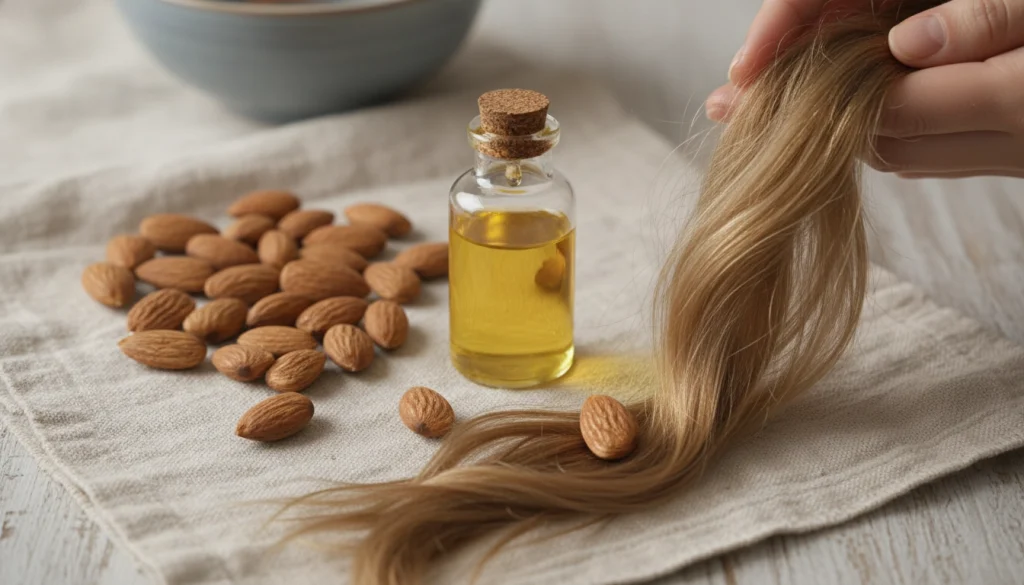
Sweet Almond oil is a lighter oil with magnesium and Vitamin E that softens and smooths without weighing hair down.
Best for: Fine to medium dry hair
Main benefits: Softness, frizz control, scalp soothing
Use tip: Apply sparingly to mid-lengths and ends
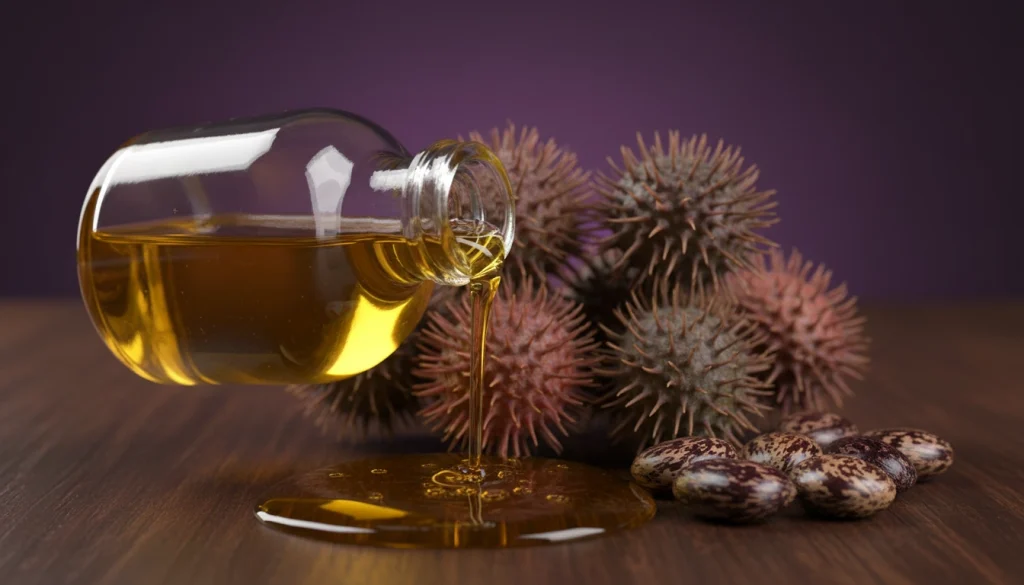
Castor oil
Castor oil (specifically Jamaican Black Castor Oil) is thick and highly effective at trapping moisture inside the hair shaft. It is rich in ricinoleic acid, which supports circulation.
Best for: Coarse, curly, or very dry hair
Main benefits: Moisture retention, texture improvement, thickness
Use tip: Mix with lighter oils and use weekly to avoid buildup
Pro Tip: Boost with Essential Oils
To maximize benefits, mix carrier oils (like coconut or jojoba) with potent essential oils for dry hair:
- Lavender Oil: Soothes dry scalp and promotes moisture.
- Rosemary Oil: Stimulates circulation and supports growth for dry brittle hair.
- Peppermint Oil: Refreshes the scalp and helps with itchiness.
How to Use Natural Hair Oils Effectively
Pre-shampoo treatment
Apply oil to dry hair before washing to protect strands from moisture loss during shampooing. Leave on for 15–30 minutes or overnight.
Leave-in hydration (The LOC method)
Use a few drops on towel-dried hair to lock in moisture and reduce frizz throughout the day. For best results, follow the LOC method (Liquid, Oil, Cream) to layer hydration effectively.
Styling support
Rub a tiny amount between your palms and smooth over dry hair to tame flyaways and add shine. This works great as a dry oil for hair finish.
Scalp care
Massage small amounts into a dry scalp to reduce flaking and support a healthy environment for hair growth. Oils like Jojoba or Tea Tree oil blends are ideal here.
Conclusion – Choosing the Right Oil for Your Hair
Natural hair oils offer a powerful solution for dry hair when used correctly. Each oil has unique strengths, from coconut oil’s deep penetration to jojoba oil’s scalp-balancing properties.
The key is matching the oil to your hair type and using it consistently without over-applying. Start with small amounts, focus on the ends, and adjust based on how your hair responds. With the right oil and routine, dry hair can become softer, shinier, and more resilient over time.